
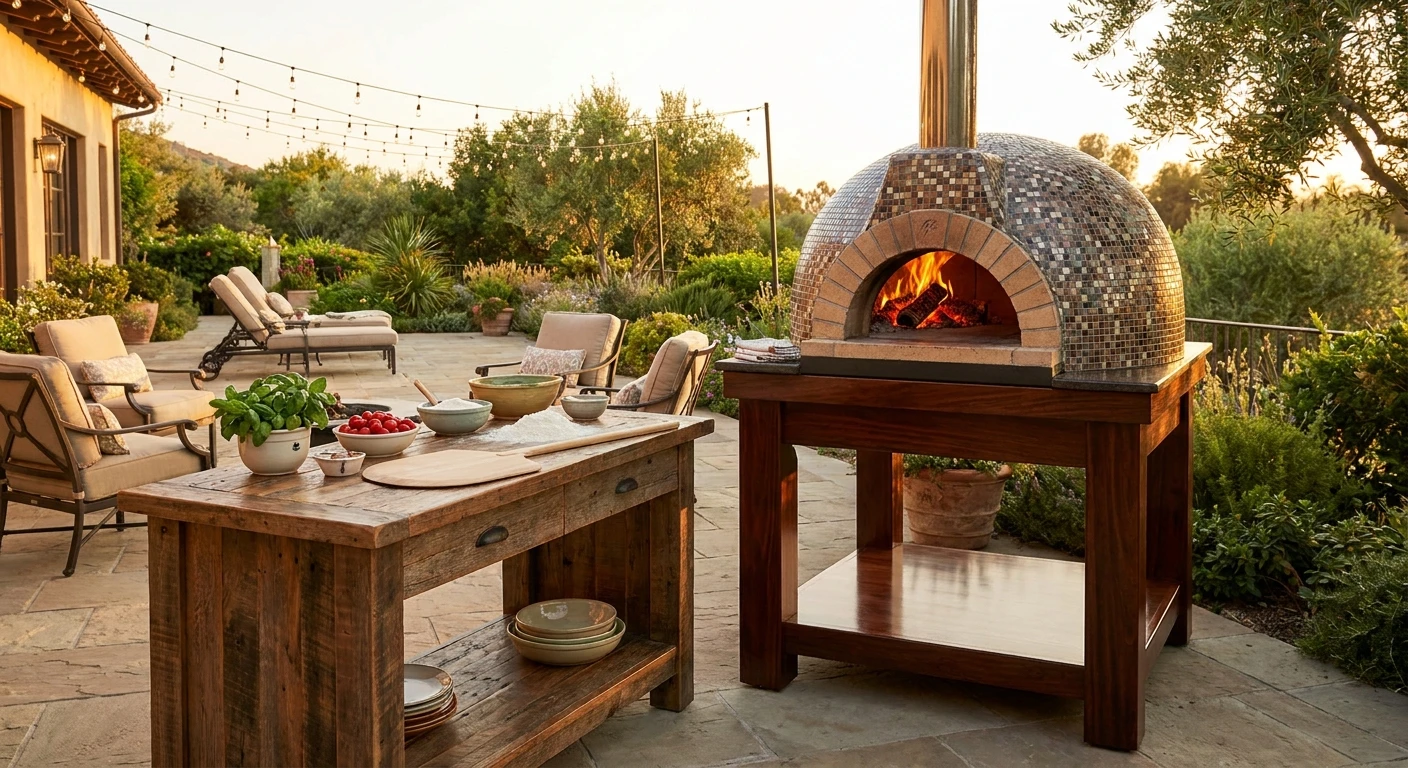
The Complete Guide to the Gozney Dome
If you are serious about outdoor cooking, the Gozney Dome has likely captured your attention with its professional-grade performance and striking design. This is not just another backyard gadget; it is a meticulously engineered culinary powerhouse designed to bring restaurant-quality results right to your patio. Whether you are aiming to craft the perfect blistered Neapolitan pizza in sixty seconds, slow-roast a massive shoulder of pork, or bake artisan sourdough loaves with incredible oven spring, the Gozney Dome delivers unparalleled versatility. The aesthetic appeal is immediate, with its smooth, ceramic-bonded outer shell and sleek, modern profile, but the real magic happens inside the cooking chamber. We are talking about a dual-fuel system that allows you to seamlessly switch between the rustic authenticity of wood-fired cooking and the precise, instant convenience of propane gas. For home chefs who crave absolute control over their heat profiles, this oven bridges the gap between commercial bakery setups and accessible residential use. By combining immense thermal mass with cutting-edge insulation technology, the oven holds its internal temperature beautifully, ensuring consistent results even on chilly evenings. It is a true game-changer for anyone wanting to push the boundaries of what is possible outside the traditional kitchen.
Understanding the core value proposition of this magnificent oven requires looking at how it handles drastically different cooking styles. You get two primary examples of its brilliance right out of the gate. First, picture a busy Tuesday evening where you want a phenomenal dinner without the hassle of building a wood fire. You ignite the gas burner, wait for the stone to hit 800 degrees Fahrenheit, and you are launching and eating world-class pizzas in under thirty minutes from start to finish. Second, imagine a lazy Sunday afternoon where you have all the time in the world. You build a beautiful hardwood fire, let the embers burn down, and slide in a heavy cast-iron skillet loaded with a whole chicken, root vegetables, and herbs. The ambient wood smoke gently flavors the meat while the radiant heat from the dome crisps the skin flawlessly. To truly maximize your cooking experience, you need to master a few fundamental techniques.
Read also: Building the Perfect Tobacco Shed Guide; Why Fissler Cookware Is The Best Kitchen Upgrade; The Best Aberdeen Sausage Recipes.
- Curing the Stone Properly: Before cooking your first meal, you must slowly introduce heat to the cordierite stone to drive out any residual moisture and prevent thermal shock cracking.
- Managing the Rolling Flame: Whether using wood or gas, you need to understand how the flame arches across the ceiling of the oven to provide top-down radiant heat, which cooks the toppings while the stone bakes the base.
- Utilizing Temperature Zones: Learn to move your food around the oven floor. The area closest to the fire is your high-heat searing zone, while the opposite side offers a gentler baking environment perfect for finishing delicate proteins.
| Feature | Gozney Dome | Standard Backyard Oven | Traditional Brick Oven |
|---|---|---|---|
| Heat Retention | Exceptional (Thick ceramic insulation) | Poor (Thin metal walls) | Excellent (Massive brick structure) |
| Fuel Versatility | Dual-Fuel (Wood and Gas) | Single Fuel (Usually Gas or Pellet) | Wood Only |
| Portability & Setup | Moderate (Stand alone or built-in, easy install) | High (Lightweight, movable) | Zero (Requires permanent construction) |
The Origins of Commercial Grade Outdoor Ovens
To truly appreciate this piece of equipment, you have to look back at how outdoor cooking technology has shifted over the last decade. Historically, if you wanted a genuine high-temperature pizza oven, you had to hire a mason, pour a concrete foundation, and spend thousands of dollars building a permanent brick structure in your yard. These traditional ovens were incredible, but they were entirely stationary, took hours to heat up, and required a massive footprint. Tom Gozney, the founder behind the brand, recognized this massive gap in the market. He started his journey by designing large, commercial wood-fired ovens for high-end restaurants across the globe. He learned exactly what professional chefs needed: intense, consistent heat, unbreakable reliability, and a design that fostered the perfect rolling flame. These commercial units were the foundation upon which the entire brand was built, proving that exceptional engineering could tame live fire.
The Evolution from Commercial to Residential
The turning point for the brand came with the realization that home consumers craved the exact same performance as restaurant chefs, just in a more manageable format. The company initially tested the residential waters with smaller, highly portable units like the Roccbox, which became a massive hit among enthusiasts. However, there was still a strong demand for something larger—a centerpiece oven that offered the vast cooking floor of a commercial unit without the need for professional installation. The engineering team took the blueprints of their massive restaurant ovens and painstakingly scaled them down. They focused on retaining the dense insulation and the specific geometry of the internal dome, ensuring that the thermodynamics remained perfectly intact in a slightly smaller footprint. This transition required innovative manufacturing techniques, particularly in developing a water-resistant, ceramic-bonded outer shell that could withstand harsh weather conditions year-round.
The Modern State of the Gozney Dome
Today, this oven stands as the pinnacle of backyard culinary equipment. It is not merely a pizza maker; it has evolved into a comprehensive outdoor roasting, smoking, and baking station. The modern iteration features meticulous attention to detail, such as the digital thermometer precisely placed to read ambient temperatures, the innovative air-flow regulation dials, and the easily removable ash drop system that makes cleanup effortless. Furthermore, an entire ecosystem of premium accessories has blossomed around the oven, including specialized steam injectors for bread baking, perfectly sized cast-iron pans, and automated pellet hoppers. The community of users has grown exponentially, sharing complex recipes and pushing the absolute limits of what can be cooked outside. It represents a paradigm shift where the outdoor kitchen is no longer an afterthought, but rather the primary stage for serious culinary exploration.
Thermodynamics and Heat Retention
If you want to understand why this oven performs so remarkably well, we have to talk about thermodynamics. The secret lies in the concept of thermal mass and advanced insulation. The floor of the oven is constructed from extremely thick cordierite stone. Cordierite is a highly engineered crystalline mineral known for its outstanding resistance to thermal shock, meaning it can handle rapid temperature changes without cracking. More importantly, it absorbs and holds heat like a sponge. When you heat the oven to 900 degrees Fahrenheit, the stone soaks up that energy. When you place a cold, wet piece of dough onto the stone, a lesser oven would instantly drop in temperature, resulting in a soggy crust. The cordierite, however, releases its stored heat rapidly, instantly vaporizing the moisture in the dough and creating that coveted airy, blistered crust. Surrounding this cooking chamber is an incredibly dense layer of modern ceramic fiber insulation. This material traps the heat inside the dome, preventing it from bleeding out into the surrounding air. This means the oven uses significantly less fuel to maintain its temperature, and the exterior shell remains relatively safe to be near, even when a roaring fire is inside.
Dual-Fuel Combustion Dynamics
The engineering behind the dual-fuel system is another marvel of modern design. Creating an oven that works perfectly with both wood and gas is incredibly difficult because the two fuels behave differently. Wood requires substantial airflow to combust efficiently, while a high-pressure gas burner needs a highly regulated, precise mixture of oxygen and fuel to prevent soot and ensure maximum heat output. The engineers solved this by designing a specialized burner that mimics the exact behavior of a wood fire. Here are the scientific facts about its combustion dynamics:
- The Rolling Flame Effect: The internal geometry of the dome is mathematically calculated to force the flames to travel up the side and roll across the ceiling, creating a blanket of intense radiant heat.
- Convection Currents: As cold air is drawn in through the front mouth, it is rapidly heated by the fire, creating a powerful circular convection current that cooks food evenly from all sides.
- Conduction Heat Transfer: The 30mm thick cordierite floor relies on direct physical contact to transfer its massive stored thermal energy straight into your cookware or pizza base.
- Optimized Draft: The specific height and diameter of the flue perfectly balance the exhaust of smoke with the intake of fresh oxygen, preventing the fire from choking itself out.
Day 1: The Initial Cure and Setup
Your first day is all about patience and preparation. Do not rush to cook immediately. You need to cure the oven to expel microscopic moisture trapped inside the stone and ceramic elements during manufacturing. Start a very small, low-temperature fire using just a few pieces of kindling, or run the gas burner on its lowest possible setting. Maintain this gentle heat of around 300 degrees Fahrenheit for a few hours. Gradually increase the temperature in stages. This slow integration of heat tempers the materials, ensuring the longevity and structural integrity of your investment. Use this time to familiarize yourself with the air flow dials and how the temperature gauge responds to your adjustments.
Day 2: The Classic Neapolitan Pizza
Now it is time for the main event. Fire the oven up to a blazing 850 to 900 degrees Fahrenheit. Prepare a classic Neapolitan dough with double zero flour, San Marzano tomatoes, fresh mozzarella, and a few basil leaves. The intense heat of the stone will cook the base in about sixty to ninety seconds. The key here is active management; you must use your turning peel to rotate the pizza every twenty seconds to prevent the side facing the fire from burning. Watching the crust puff up and blister under the rolling flame is a mesmerizing experience that justifies the oven immediately.
Day 3: High-Heat Sear and Steak House Results
On the third day, we pivot away from dough and focus on premium proteins. Get a thick-cut ribeye steak and a heavy cast-iron skillet. Pre-heat the skillet right inside the oven until it is terrifyingly hot. Season your steak generously with coarse salt. Drop the steak into the dry, blazing hot pan. The intense ambient heat combined with the conduction from the cast iron will create a spectacular, caramelized crust in minutes. Flip the steak once, finish with a compound butter, and pull it out to rest. You will achieve a restaurant-quality sear that is virtually impossible to replicate on a standard indoor stovetop.
Day 4: Cast Iron Skillet Roasting
Let us utilize the retained heat for something heartier. Fire the oven to around 600 degrees Fahrenheit. Chop up some fingerling potatoes, carrots, and onions, tossing them in olive oil and rosemary. Place them in a roasting pan with a whole spatchcocked chicken resting on top. As the chicken roasts, its juices will drip down and flavor the root vegetables. The ambient heat of the dome will crisp the chicken skin beautifully while ensuring the meat remains incredibly juicy. This proves the oven is a phenomenal everyday cooking tool, not just a weekend pizza maker.
Day 5: Low and Slow Wood-Fired Smoking
Today, we explore the lower end of the temperature spectrum. Using the wood-fired option, build a small fire and let it burn down to glowing embers. Manage the airflow to maintain a steady temperature of around 275 degrees Fahrenheit. Place a beautiful pork shoulder or a rack of ribs on a raised rack with a drip pan underneath. Toss a few chunks of applewood or hickory onto the embers to generate a clean, thin blue smoke. Let the meat gently cook for several hours. The resulting smoke ring and tender, pull-apart texture will rival dedicated barbecue smokers.
Day 6: Artisan Bread and Sourdough Baking
Baking artisan bread requires a different approach: falling heat and steam. Fire the oven up to 600 degrees Fahrenheit, let the stone thoroughly saturate with heat, and then completely extinguish the fire. The incredible insulation will hold this temperature for hours. Use a steam injector or a spray bottle to create a burst of steam inside the chamber, which is crucial for achieving maximum oven spring. Load your scored sourdough boules directly onto the hot stone and seal the door if you have one. The retained, radiant heat bakes the bread deeply, resulting in a thick, crackling crust and an airy crumb.
Day 7: Dessert and Residual Heat Cooking
After a week of intense cooking, let us use the gentle, dying heat of the oven for dessert. If you cooked a large meal earlier in the evening and the oven is slowly dropping past 400 degrees Fahrenheit, it is the perfect environment for baking. Slide in a cast-iron skillet filled with a rustic apple galette, a mixed berry cobbler, or even a batch of dark chocolate brownies. The subtle hint of wood smoke (if you used wood earlier) adds a remarkable, complex depth of flavor to sweet baked goods, providing the perfect conclusion to your seven-day culinary masterclass.
Myths & Reality
Myth: The Gozney Dome is only useful for making pizzas.
Reality: It is an incredibly versatile outdoor culinary station. Its massive thermal mass and precise temperature control make it exceptional for high-heat searing, low-and-slow barbecue smoking, and baking artisan breads or roasting vegetables.
Myth: Cooking with a live wood fire is too difficult and unpredictable for beginners.
Reality: The advanced engineering, built-in digital thermometer, and specific internal geometry make managing a live fire highly approachable. The design naturally pulls oxygen efficiently, creating a stable, predictable rolling flame with minimal effort.
Myth: You have to store the oven indoors during the winter months to protect it.
Reality: The exterior is constructed with a highly durable, water-resistant, ceramic-bonded outer shell. Paired with a proper, high-quality weather cover, the oven is fully designed to remain outside and be used effectively year-round, even in freezing temperatures.
Myth: It takes several hours to heat up the stone for cooking.
Reality: Because of the highly efficient insulation and powerful burner system, the oven can reach professional pizza-cooking temperatures of 900 degrees Fahrenheit in roughly 40 to 45 minutes.
FAQ
What is the difference between the dual-fuel and wood-only versions?
The dual-fuel model includes an integrated gas burner alongside the wood-burning capabilities, offering ultimate convenience for quick meals. The wood-only model lacks the gas burner and is designed strictly for traditionalists who only want to manage live fires.
Do I need a special table or stand for it?
While you do not strictly need the official stand, the oven is extremely heavy. It must be placed on a sturdy, non-combustible surface capable of safely supporting over 130 pounds permanently.
Can I bake normal bread inside it?
Absolutely. The thick cordierite stone and heavy insulation make it a spectacular bread oven. You can utilize the retained heat after extinguishing the fire to bake incredible sourdough loaves with fantastic crusts.
How do I clean the cordierite stone floor?
Never use soap or water on the stone. Simply fire the oven up to its maximum temperature; the intense heat will burn off any spilled food or organic residue, turning it into ash that you can easily brush away once cooled.
Is it safe to use on a wooden deck?
Yes, it is safe to use on a wooden deck provided it is placed on a proper stand or non-combustible table. The intense heat is heavily insulated, meaning the bottom of the oven does not get hot enough to ignite surfaces below it.
What kind of wood should I use?
Always use kiln-dried, seasoned hardwoods such as oak, ash, beech, or fruitwoods like apple and cherry. Never use softwoods like pine, as they produce excessive, bitter soot and dangerous creosote buildup.
Can I leave it outside in the rain?
The oven is water-resistant and built for outdoor life, but to protect the internal components and the longevity of the materials, it is highly recommended to always use the official weather-proof cover when not actively cooking.
Summary: The Gozney Dome represents a monumental leap in outdoor cooking technology, seamlessly blending the raw, elemental power of a traditional wood fire with modern engineering and gas convenience. Whether you are a novice looking to master your first pizza or a seasoned chef wanting to expand your open-fire repertoire, this oven provides the tools to elevate every meal. Do not wait to transform your backyard into the ultimate culinary destination; explore the world of premium outdoor cooking today!