
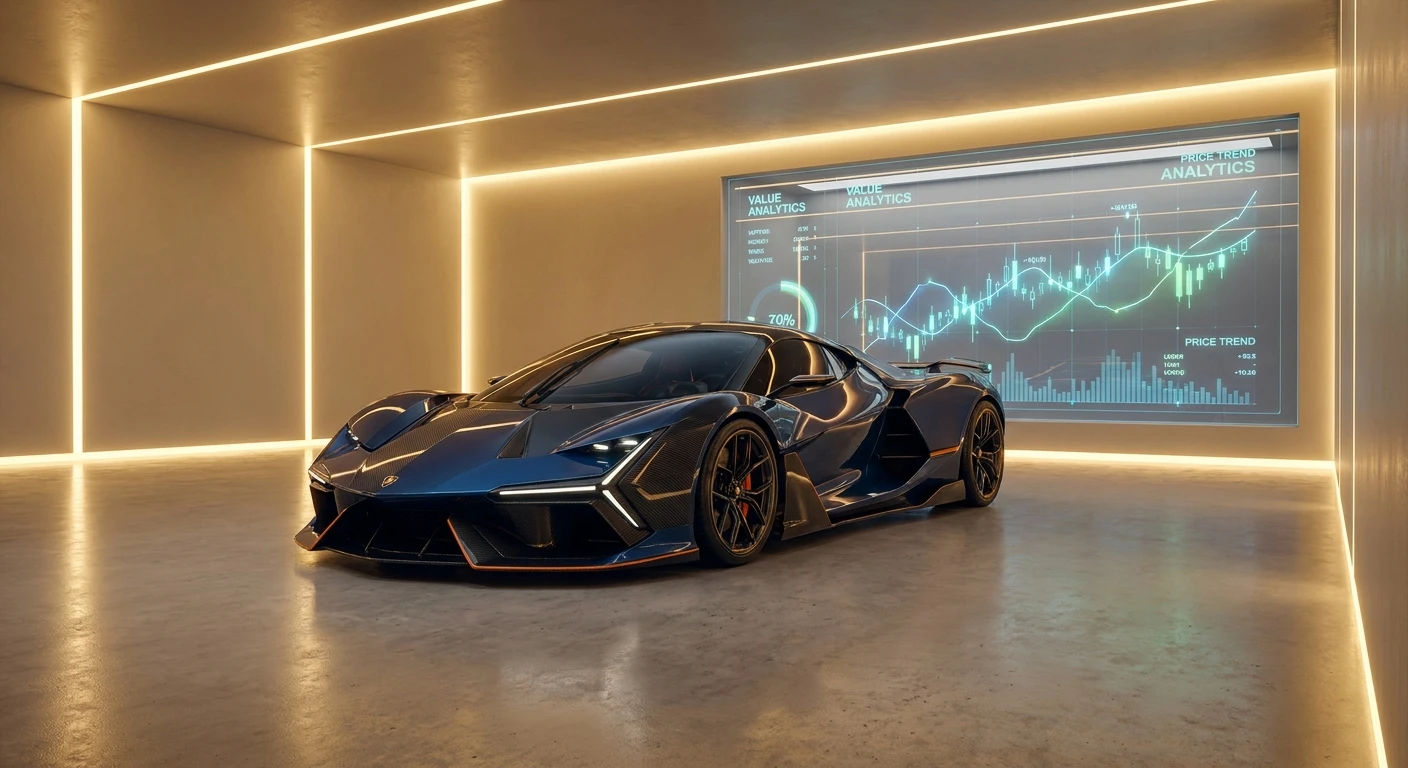
Understanding the KTM X Bow GT XR Price and Value
When you start looking into the KTM X Bow GT XR price, you quickly realize this is not just another mass-produced sports car; it is a street-legal race machine built for pure adrenaline and precision. The aggressive electronic canopy, exposed carbon-fiber chassis, and raw power make it an absolute dream for hardcore driving enthusiasts and collectors alike. If you are calculating the exact financial commitment needed to park this Austrian beast in your garage, you need to factor in base costs, bespoke optional extras, and international import duties. The base model sits firmly at a premium bracket, rivaling well-established supercars from Italy and Germany, yet offering a distinct, uncompromising track experience that few can replicate. KTM engineered the GT-XR to bring their GT2 racing expertise straight to public roads without heavily diluting the formula. You get an Audi-sourced turbocharged 2.5-liter five-cylinder engine producing a staggering 500 horsepower, housed within an ultra-lightweight carbon monocoque. Because the entire vehicle weighs just over 2,400 pounds, the power-to-weight ratio is phenomenal. This machine gives you genuine hypercar performance at a supercar cost. Figuring out the true financial outlay involves understanding exactly what comes standard from the factory and what requires a steep upcharge. We will break down exactly how much you can expect to pay, why it commands such a premium valuation in the automotive market, and whether the investment aligns with your ultimate high-performance driving goals.
Deciphering the financial aspects of purchasing this exclusive vehicle means looking closely at the core value proposition. You are paying for uncompromising motorsport engineering and extreme rarity. For instance, the carbon-fiber monocoque chassis alone represents top-tier manufacturing, providing unmatched torsional rigidity while keeping the overall vehicle weight incredibly low. Another prime example of this value is the dramatic fighter-jet-style electronic canopy, which offers a theatrical entry and exit experience that absolutely no other production car on the market can match. These bespoke, highly technical elements easily justify the steep entry fee.
Read also: The Aston Martin Valhalla Price: Complete Buyer's Guide; Apollo Evo Price Guide: Exclusivity and Hypercar Costs; The Rolls-Royce La Rose Noire Droptail Masterpiece.
Let us break down the estimated financial components you will encounter.
| Expense Category | Estimated Cost (USD) | Description |
|---|---|---|
| Base Vehicle MSRP | $300,000 – $350,000 | Standard factory specification without any custom optional upgrades. |
| Carbon Fiber Packages | $15,000 – $25,000 | Additional aerodynamic parts and extensive exposed carbon elements. |
| Delivery and Import | $5,000 – $15,000 | Shipping logistics from Austria, customs processing, and homologation fees. |
To fully grasp what influences the final cost, you should consider a few mandatory steps and realities in the complex acquisition process.
- Securing a Rare Build Slot: Due to extremely limited annual production numbers (often strictly capped at around 100 units per year globally), prospective buyers must place a substantial deposit simply to reserve a place in the manufacturing queue.
- Selecting Optional Equipment: KTM offers extensive bespoke customization options. Choosing a custom paint-to-sample color, upgraded carbon-ceramic racing brakes, or specialized multipoint racing harnesses will rapidly inflate the final transaction amount.
- Navigating Regional Taxes: International import tariffs, luxury vehicle taxes, and local registration fees can easily add up to 20% to the total expenditure depending on your specific country of residence and local tax laws.
The intimidating price tag ultimately filters out casual buyers, leaving a dedicated global community of track-day enthusiasts who deeply understand the rare engineering pedigree embedded in this Austrian masterpiece. The costs are unquestionably substantial, but the resulting driving purity and mechanical feedback are practically unmatched on public roads anywhere in the world.
Origins of the X-Bow Lineage
The fascinating story of KTM’s bold leap from two-wheeled dominance to four-wheeled innovation began in 2008 with the original X-Bow. Initially, KTM, a dominant force in off-road and track motorcycles, wanted to translate its legendary ‘Ready to Race’ philosophy into a minimalist, featherweight sports car. They partnered with the renowned Italian race car manufacturer Dallara to engineer an advanced carbon-fiber tub and utilized proven Audi engines to ensure reliable, potent power delivery. The very first iterations had no doors, no roof, and completely lacked a windshield, offering an unfiltered, highly elemental driving experience that targeted track-day purists exclusively. This raw, back-to-basics approach kept initial production costs somewhat manageable, but the highly specialized nature of the open-air vehicle meant it appealed strictly to a very niche motorsport market.
The Evolution into the GT2 Class
Over the next decade, the X-Bow platform matured significantly on the global stage. KTM executives realized that to compete at the highest, most lucrative levels of global motorsport, they desperately needed a closed-cockpit design featuring advanced aerodynamics and massive downforce capabilities. This critical realization directly led to the aggressive development of the X-Bow GTX and the formidable GT2 race car. The GT2 dominated its respective racing class in the European series, proving beyond doubt that KTM’s chassis architecture could seamlessly handle massive downforce and substantially higher horsepower outputs. Engineers relentlessly refined the suspension geometry, dramatically upgraded the aerodynamic profile to slice through the air, and completely optimized the complex thermal management systems. The widespread racing success thoroughly validated their engineering concepts, prompting immediate demand from wealthy clients for a road-legal version that retained the brutal performance of the track-only cars.
The Modern State of the GT-XR
Today, the GT-XR stands as the absolute apex of this long evolutionary process. KTM successfully adapted the victorious GT2 race car for everyday street use without diluting its famously aggressive DNA. The modern street-legal iteration miraculously includes a fighter-jet-like electric canopy, efficient air conditioning, and a high-definition digital rearview mirror system, making it somewhat more practical for longer road trips or driving comfortably to the local circuit. By maintaining incredibly strict production limits at their state-of-the-art Graz manufacturing facility, KTM effortlessly ensures vehicle exclusivity. This calculated scarcity directly supports the premium financial valuation and sustains high desirability among elite automotive collectors globally.
Aerodynamics and Carbon Fiber Construction
To truly comprehend why the KTM X Bow GT XR price rests firmly in the upper echelons of supercar territory, you have to look closely at the advanced materials science involved in its meticulous construction. The foundation of the vehicle is a full carbon-fiber monocoque. A monocoque is a highly advanced structural approach where the external skin absorbs most of the driving stresses, much like an eggshell. This specific manufacturing method, borrowed directly from Formula 1 racing, results in a central safety tub that weighs a mere 196 pounds (89 kilograms) yet offers immense torsional stiffness. Torsional stiffness means the chassis actively resists twisting under heavy cornering loads, ensuring the complex suspension system does all the necessary work to keep the specialized tires glued to the asphalt. Furthermore, the vehicle brilliantly utilizes a completely flat underbody combined with a massive rear diffuser to generate intense negative air pressure, effectively sucking the car to the road at high speeds without suffering the severe drag penalty of oversized, top-mounted wings.
Powertrain and Jet-Fighter Canopy Mechanics
The powertrain engineering heavily relies on Audi’s legendary 2.5-liter turbocharged inline-five engine. KTM’s software engineers specifically tuned the Engine Control Unit (ECU) to deliver highly linear, predictably smooth power perfectly suited for such a lightweight chassis. Paired with a lightning-fast seven-speed dual-clutch transmission, the setup provides instantaneous, aggressive gear shifts. Another undeniable technical marvel is the motorized electronic canopy. Instead of conventional swinging doors, the entire roof and windshield section lifts forward electronically, granting access to the cockpit.
Here are some fascinating technical specifications that justify the investment:
- Power-to-weight ratio: At roughly 2,491 lbs (1,130 kg) overall and producing a massive 500 horsepower, it yields approximately 4.98 pounds per horsepower.
- Aerodynamic Downforce: The proprietary AirCurtain system cleverly routes incoming air right through the front chassis and securely out behind the front wheels to drastically reduce turbulent drag and optimize aerodynamic grip.
- Braking G-Force: Optional carbon-ceramic racing brakes, when combined with a remarkably low center of gravity, allow the car to confidently pull well over 1.5 Gs during heavy deceleration.
- Steering geometry: It utilizes advanced pushrod suspension mechanics at the front end, a highly specialized setup strictly derived from open-wheel racing designed to minimize unsprung mass.
Step 1: Secure Your Financing or Capital
Before ever engaging a dealership, you must verify you have the liquid assets or specialized financing properly in place. Traditional consumer auto loans rarely cover such niche, ultra-low-production supercars. You will highly likely need a tailored luxury car loan, a bespoke leasing agreement, or a private banking arrangement to comfortably handle the large financial transaction.
Step 2: Locate an Authorized Dealership
KTM operates a very select, highly exclusive network of authorized four-wheel dealers globally. You must use the official manufacturer directory to find a certified importer or elite dealer in your specific region, as regular KTM motorcycle dealers completely lack the authorization to process GT-XR automotive orders.
Step 3: Schedule a Private Consultation
Contact the authorized dealer directly to schedule a formal, initial consultation. This face-to-face or virtual meeting firmly establishes your serious intent as a buyer and allows the knowledgeable sales representative to explain current global production timelines, exact base costs, and allocation availability specifically for your country.
Step 4: Configure Your Specifications
Work patiently through the bespoke configuration process. You will need to decide on your exterior paint color, carbon fiber finish (gloss or matte), forged wheel designs, and interior Alcantara stitching colors. This critical step heavily influences your final invoice, as custom factory requests drive the numbers up rapidly.
Step 5: Place the Allocation Deposit
To successfully lock in your dedicated build slot at the Graz factory, you must wire a substantial, typically non-refundable deposit. This serious financial commitment guarantees your exact place in the manufacturing queue, which is absolutely vital given the strict 100-unit annual production limit.
Step 6: Monitor the Build Process
Vehicle production takes several months to complete. Stay in regular contact with your dealer, who can often provide exciting updates or even exclusive photos straight from the Austrian assembly line. This waiting period is the perfect time to arrange specialized garage storage and high-value vehicle insurance.
Step 7: Finalize Import, Taxes, and Delivery
As the car nears final completion, you must finalize the remaining financial balance. Work closely alongside the dealer to skillfully handle complex international import logistics, expensive customs duties, local emissions homologation paperwork, and the final enclosed-trailer delivery directly to your driveway or local track facility.
Myth: The GT-XR is just a high-revving motorcycle engine bolted into a car chassis.
Reality: It utilizes a highly robust, automotive-specific Audi 2.5-liter turbocharged five-cylinder engine, absolutely not a motorcycle powerplant, ensuring immense torque and true supercar-level reliability.
Myth: You cannot drive this aggressive model on public roads legally.
Reality: Despite its intimidating LMP-style appearance, the vehicle is fully street-legal and properly homologated for public road use in numerous global markets, complete with rigorous safety and emissions compliance.
Myth: The stated base price generously covers absolutely everything you need for serious track days.
Reality: While highly capable straight out of the box, hardcore track enthusiasts typically spend tens of thousands of dollars more on optional carbon-ceramic brakes, specialized racing harnesses, and extra aerodynamic packages.
Myth: It offers absolutely zero interior comfort features for the driver.
Reality: The modern iteration surprisingly features effective air conditioning, Bluetooth audio integration, and a digital rear-view camera system, adding a highly welcome layer of basic touring comfort.
Myth: Anyone with enough money can walk in and buy one immediately.
Reality: Due to severe production constraints, buyers must secure an allocation slot, meaning even the wealthiest clients have to wait months for their bespoke vehicle to be built.
Is the car fully street legal?
Yes, it is purposefully designed and officially homologated specifically for public road use.
How much does the base model initially cost?
Expect the starting financial figure to fall roughly around $300,000 to $350,000 before options.
Can I service it at a normal local mechanic?
No, it absolutely requires specialized, highly technical maintenance from an authorized KTM auto dealer.
What is the official top speed?
It can confidently reach a verified top speed of approximately 174 mph (280 km/h) depending on aero settings.
How many units are actively built per year?
Global production is strictly capped at around 100 units annually to preserve exceptional exclusivity.
Does it have normal passenger doors?
No, it features a highly dramatic forward-lifting, electronic jet-fighter-style canopy instead of doors.
Is the vehicle readily available worldwide?
Availability depends heavily on highly specific regional vehicle emission standards and safety homologation laws.
What type of fuel does the engine require?
It strictly requires premium high-octane unleaded fuel to achieve its maximum performance metrics.
Is there a dedicated luggage compartment?
Yes, it features a surprisingly practical 160-liter trunk space designed to hold bespoke fitted luggage.
Understanding the KTM X Bow GT XR price ultimately requires deeply appreciating the phenomenal mechanical engineering, extreme carbon-fiber construction techniques, and incredibly limited production numbers that firmly define it. If you crave a highly visceral, street-legal race car experience that turns heads everywhere, start planning your automotive budget and meticulously contact your nearest specialized dealer today to secure your highly coveted build slot!