The Magic of snow japan: A Rider’s Ultimate Dream
If you have ever dreamed of bottomless, untouched powder runs, you already know that snow japan is the absolute pinnacle of winter sports on this planet. Hey everyone! Listen, as someone who spent their youth scraping edges on the icy, unpredictable slopes of Dragobrat and dodging absolute chaos in Bukovel back in Ukraine, experiencing the legendary Hokkaido dumps for the first time felt completely unreal to me. I literally had to dig my rental car out of a two-meter snowbank every single morning before I could even think about getting my morning coffee. Now that we are deep into the 2026 winter season, the global hype has literally never been more justified. Forget everything you know about standard resort riding in Europe or North America. We are talking about chest-deep, weightless flakes that float around you like magic dust, offering a sensation of true surfing on land. My goal right now is to give you the exact blueprint on how to make this trip happen without breaking the bank or losing your mind navigating the complex logistics. Grab a cup of coffee, sit back, and let me walk you through the real deal on getting the absolute most out of your Asian winter adventure.
Getting straight to the point, the main reason you travel halfway across the world is for the legendary consistency. The weather patterns here are basically a conveyor belt of precipitation. You do not just hope for a good powder day; you expect them back-to-back. Let me break down where you actually want to go depending on your riding style. Here is a quick cheat sheet comparing the heavy hitters:
| Resort Area | Snow Profile | General Vibe |
|---|---|---|
| Niseko United | Dry, extremely abundant | International, busy, English-friendly |
| Hakuba Valley | Steep terrain, varied conditions | Alpine feel, incredible nightlife |
| Nozawa Onsen | Deep powder, heavier base | Traditional, cultural, rustic aesthetics |
The sheer value you get here is off the charts. First, you get the actual skiing experience—riding un-tracked tree lines that literally refill every few hours. Second, you get the cultural apres-ski. Imagine finishing a freezing day and immediately soaking your tired muscles in a natural geothermal hot spring while drinking hot sake. It completely ruins normal skiing for you. If you want to pull this off properly, you need to prepare right. Here are the absolute non-negotiables for your trip:
- Book your accommodation six months early: Spots in Hirafu or Hakuba fill up insanely fast. If you wait until November, you will end up sleeping in a neighboring town and taking a miserable 45-minute bus ride every morning.
- Bring the right hardware: Leave your skinny carving skis at home. You need underfoot widths of at least 105mm, preferably over 115mm. Snowboarders, grab a swallowtail or a dedicated volume-shifted powder deck.
- Upgrade your layering system: The moisture level in the air means you will get damp quickly if you fall. Gore-Tex outer shells and pure merino wool base layers are an absolute must to stay warm and dry out there.
You do not want to fly twelve hours just to realize your gear is sinking instead of floating. Proper planning fixes all of that before you even step on the plane.
The Origins of Winter Sports in the East
You might think skiing here is a fairly recent global trend, but the roots actually go way back in history. In 1911, an Austro-Hungarian military officer named Major Theodor Edler von Lerch introduced modern alpine skiing to the local military forces stationed in Niigata prefecture. He basically brought a pair of long wooden planks and taught the locals how to slide down the snowy hills for practical movement. At first, it was purely a utilitarian and military exercise meant to help troops traverse difficult winter terrain. It took several decades for the activity to evolve into a recreational pastime for the general public, but that early foundation was critical.
The Evolution of Resort Culture
Fast forward to the massive economic boom of the 1980s. The nation experienced extreme financial wealth, and real estate developers went completely crazy building out ski infrastructure. We are talking hundreds of expensive lifts installed across rural mountain ranges, massive concrete luxury hotels popping up overnight, and a rapidly booming domestic ski industry. Absolutely everybody and their mother was buying high-end neon gear. However, when the economic bubble violently burst in the early 1990s, many of these resorts went bankrupt or became eerie ghost towns overnight. The domestic weekend crowd thinned out significantly, leaving behind empty slopes. But guess what? The majestic mountains and the chairlifts stayed put, waiting for a revival.
The Modern State of the Slopes
In the early 2000s, adventurous Australian tourists discovered this forgotten goldmine. They realized flights were incredibly cheap, there was zero jet lag coming from Sydney, and the mountains were completely empty. Word spread like wildfire through the ski bum community. Now, spots like Hokkaido and Nagano have transformed into bustling global hubs. Despite the massive influx of international tourists, the country still magically maintains a huge number of hyper-local, completely empty mom-and-pop hills right down the road from the giant mega-resorts. The infrastructure is definitely aging in some random spots, but the powder quality remains undefeated. You get this wild, cinematic contrast of 1980s retro lift stations standing right next to brand-new, ultra-modern luxury chalets. It is honestly the most unique atmosphere you will ever experience on a mountain.
The Mechanics of Japow (Ocean Effect Snow)
Why is the precipitation here so unbelievably good? It comes down to pure geography and localized meteorology. People casually throw around the term ‘Japow’ all the time, but the actual science behind it is fascinating. Freezing, brutally cold winds constantly sweep down from the massive, frozen landmass of Siberia. As this frigid air violently crosses the Sea of Japan, it picks up a massive amount of moisture from the relatively warm ocean water. When this heavy, moisture-laden air eventually hits the jagged coastal mountain ranges of Hokkaido and Honshu, it is forced upward immediately. This process cools the air rapidly, causing it to dump all that trapped moisture as perfect, crystalline snow. It is basically a giant, naturally occurring snow-making machine that runs non-stop from December through late February.
Microclimates and Snow Density
Not all snowflakes are created equal. The stuff you find here is famously dry. By the time we hit the core weeks of the 2026 season, the moisture content is regularly measuring incredibly low, normally between four and eight percent. That means the snow is mostly just trapped air. Here are the hard scientific facts about what makes this specific microclimate so incredibly special for winter sports:
- Constant Siberian wind patterns: These ensure that temperatures stay consistently well below freezing, completely preventing the dreaded melt-freeze crusts that ruin runs elsewhere.
- Massive moisture absorption: The Sea of Japan acts just like a warm, steaming bath, supplying endless water vapor to the passing storm systems.
- Orographic lift: This is essentially just a technical meteorological term for massive mountains forcing fast-moving air upwards, triggering heavy localized precipitation.
- Ultra-low water content: Because the wet air freezes so incredibly rapidly upon hitting the slopes, the crystal formation is remarkably small and airy, creating ‘blower powder’ that you can literally clear off your car windshield with a leaf blower.
It is super rare to find this exact perfect combination of geographic factors anywhere else globally. The Great Lakes region in the US gets something similar, but they completely lack the massive vertical mountain drops required for real skiing.
I know planning a massive trip like this feels totally overwhelming. Let me give you my personal, tried-and-true 7-day battle plan for maximizing your limited time in Hokkaido.
Day 1: Arrival in Sapporo and Acclimatization
Fly into New Chitose Airport. Do not rush straight to the mountains while you are exhausted. Spend your first night hanging out in Sapporo. Eat some incredible local soup curry, check out the massive local gear shops to grab any missing essentials, and let your body fully adjust to the massive time zone shift.
Day 2: First Turns at Niseko United
Catch an early morning bus straight to Niseko. Grab your electronic lift pass and spend the entire day casually cruising the wide groomers and lower tree lines just to get your ski legs firmly under you. The massive interconnected system of four resorts gives you plenty of easy ground to cover.
Day 3: Exploring the Backcountry Gates
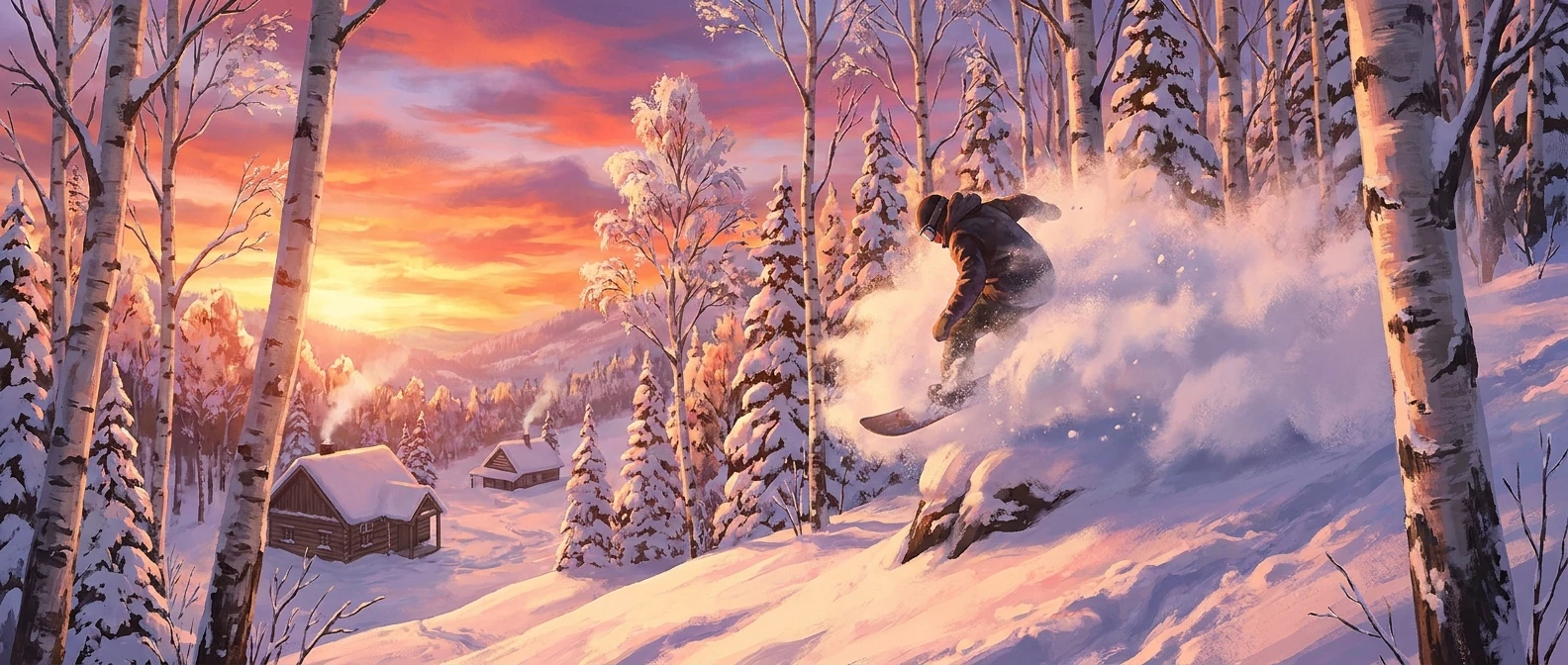
Once you feel confident in your balance, it is time to hit the famous sidecountry gates. Gate 11 is a personal absolute favorite. You scan your electronic avalanche beacon, step directly out of bounds, and suddenly you are floating in completely untracked, waist-deep perfection among silent birch trees.
Day 4: Rest and Cultural Immersion (Onsen Day)
Your quads and calves will be screaming by day four. Take a slow morning off. Head straight to a traditional outdoor onsen. Sitting totally naked in boiling hot volcanic water while freezing snow falls gently on your head is weirdly the absolute best muscle recovery method ever invented by mankind.
Day 5: Journey to Rusutsu for Tree Skiing
Take an easy day trip over to the neighboring Rusutsu resort. This place is world-famous for having perfectly spaced trees and basically zero crowds compared to Niseko. It also features a totally bizarre, abandoned-looking summer amusement park right at the base of the mountain which makes for great photos.
Day 6: Hiking Mt. Yotei for the Ultimate Line
If you brought your backcountry touring gear and the weather is perfectly clear, hire a certified local guide and skin up Mt. Yotei, the massive, imposing volcano dominating the local skyline. Skiing directly into the massive volcanic crater is an absolute bucket-list accomplishment for any serious rider.
Day 7: Final Laps and Celebrating with Ramen
Spend your final morning doing fast, hot laps on the center high-speed lifts. Pack up your damp gear, check out of your lodge, and reward yourself with a massive, steaming bowl of authentic, rich Hokkaido miso ramen before catching the shuttle back to the airport.
People tend to have incredibly wild misconceptions about traveling to East Asia for winter sports. Let us quickly clear up the absolute nonsense right now so you can plan with confidence.
Myth: It is insanely expensive to ride there.
Reality: Lift tickets are shockingly cheap compared to the US market. A full day pass at a premier resort costs around fifty to sixty bucks, which is less than a quarter of what you pay in Colorado or Utah. Food on the mountain is also fairly priced and actually delicious.
Myth: You need to hire a guide for everything you do.
Reality: While guides are definitely great for remote alpine touring, major resorts have massive, easily accessible sidecountry zones with clear gate systems. As long as you have your own avalanche gear and know how to use it, you can ride safely on your own.
Myth: It only snows heavily on the North Island of Hokkaido.
Reality: Honshu (the main island) gets absolute massive dumps too. Places like Hakuba and Myoko Kogen often record more total accumulation than northern resorts, plus they offer significantly steeper terrain for advanced riders.
Got some rapid-fire logistical questions? I have quick, direct answers for you.
When is the absolute best time to visit?
Late January to early February is the peak powder season. The ski community literally calls this time frame ‘Japanuary’ for a reason.
Do I really need specialized powder skis?
Yes. Do not even attempt deep storm days with narrow carving skis. You will sink, get stuck in the flats, and absolutely hate your life.
Is English widely spoken at the resorts?
In mega-resorts like Niseko, yes, almost everywhere. In smaller, traditional towns, rely heavily on a translation app on your phone.
Can I use my Epic or Ikon pass?
Yes, both major mega-passes have partnered with several mountains across the country. Just check your specific tier for the exact days allowed.
Are tattoos allowed in the public onsens?
Most traditional public baths strictly prohibit tattoos, but you can easily rent a private bath or cover small ink patches with skin-colored bandages.
What exactly is Japow?
It is just a popular slang mashup of the words Japan and Powder, widely used to describe the ultra-dry, incredibly deep riding conditions found there.
Do I need an avalanche beacon in-bounds?
Not on the groomed runs, but if you exit through any marked backcountry gates, wearing beacons, shovels, and probes is strictly mandatory and checked by patrol.
How cold does it actually get on the mountain?
Expect daytime high temperatures hovering around minus five to minus ten degrees Celsius, but the coastal wind chill frequently makes it feel much colder, so layer up.
To wrap things up, pulling the trigger on a massive trip to experience the insane snow japan offers is something you will absolutely never regret doing. It is the peak of winter sports culture combined with unbeatable terrain. Stop hesitating, lock in those long-haul flights, prep your widest gear, and get yourself ready for the absolute best turns of your entire life!