
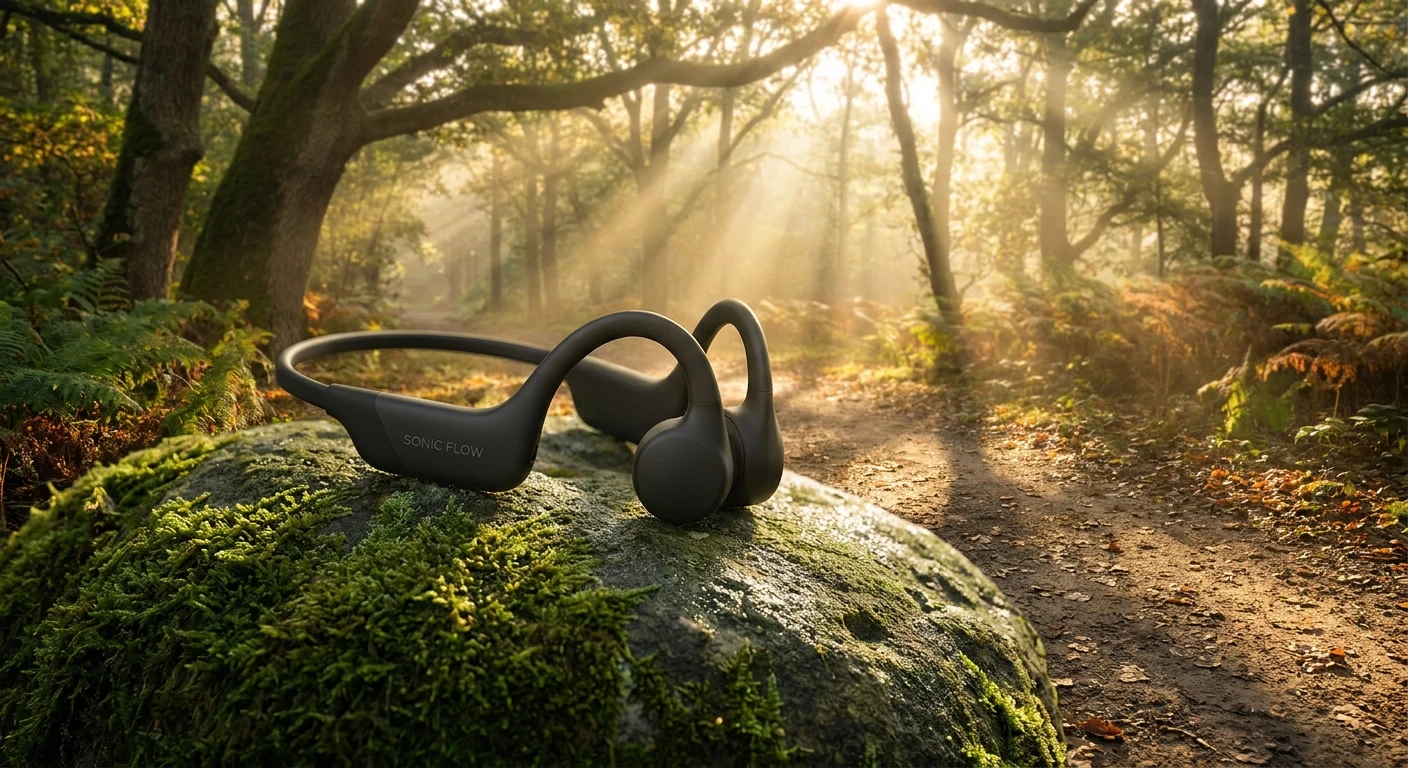
Shokz OpenRun Pro 2: Revolutionizing Your Audio Experience
If you want to listen to music while staying perfectly aware of your surroundings, the Shokz OpenRun Pro 2 is the exact piece of technology you need right now. For athletes, commuters, and outdoor enthusiasts, sealing off the ear canal from the outside environment is a massive safety hazard. You need to hear traffic, pedestrians, and natural warning signs, but you also want high-fidelity audio pumping through your head to keep your energy up. This specific headset strikes that delicate balance flawlessly.
Instead of relying purely on traditional speakers that plug your ears, this device utilizes hybrid technology to transmit sound directly to your inner ear while keeping your actual ear canal completely open. It feels entirely different from wearing standard earbuds. You get the sensation that a personalized soundtrack is simply floating in the air around your head. The comfort level is absurdly high because there is absolutely nothing pressing inside your ear or creating pressure vacuums.
Read also: The Ultimate Walking Pad Guide for Home Fitness; Bondi Junction Stabbing: The Truth; The Ultimate backyard ultra record Guide.
As endurance sports and daily fitness routines evolve, the demand for non-isolating audio gear has skyrocketed. You no longer have to choose between rich sound quality and situational awareness. The hardware packed into this lightweight titanium frame proves that you can have deep bass, clear vocals, and full environmental transparency all at the same time. Let us break down exactly how this gear functions and why it dominates the sports audio market.
Core Benefits and Real-World Application
The primary advantage of the Shokz OpenRun Pro 2 lies in its proprietary DualPitch technology, which radically improves the audio spectrum compared to older bone conduction models. Previously, users had to sacrifice low-end bass frequencies for safety. Now, the hybrid acoustic system deploys a dedicated air conduction driver specifically for deep, resonant bass, while the bone conduction transducer handles the crisp mid and high frequencies. This creates a remarkably full sound profile.
Consider the immense value proposition here across different lifestyles. For the urban runner, dodging cars, electric scooters, and pedestrians requires hyper-awareness. Wearing these allows you to blast a high-tempo playlist while still hearing the subtle hum of an approaching electric vehicle. For the remote worker, you can seamlessly listen to lo-fi focus beats or attend virtual meetings without blocking out the sound of the doorbell or a family member asking a question from the next room.
| Feature Profile | Shokz OpenRun Pro 2 | Original OpenRun Pro | Standard In-Ear Monitors |
|---|---|---|---|
| Audio Delivery | Hybrid DualPitch (Bone + Air) | 9th Gen Bone Conduction Only | Air Conduction (Sealed) |
| Situational Awareness | 100% Open-Ear Transparency | 100% Open-Ear Transparency | Isolating / Fake Passthrough |
| Bass Response | Deep & Resonant (Dedicated Driver) | Moderate (Vibration-heavy) | High (Dependent on ear seal) |
| Comfort & Fit | Zero Ear Fatigue, Secure Titanium | Zero Ear Fatigue, Secure Titanium | Can cause canal pressure/fatigue |
To maximize your experience and extract the best possible audio from your device, follow these precise steps:
- Position the transducers directly on your cheekbones, just slightly in front of your ears, ensuring they are not resting on your temples or your tragus.
- Download the dedicated smartphone companion app to access the built-in equalizer, allowing you to switch between Vocal mode for podcasts and Standard mode for music.
- Adjust the titanium band so it rests securely around the back of your neck; it should hover slightly or rest gently on the skin without bouncing during heavy foot strikes.
- Utilize the multi-point pairing feature to connect the headset to both your laptop and your smartphone simultaneously, ensuring you never miss a call while working.
Origins of Bone Conduction Technology
To fully appreciate the hardware sitting on your cheekbones, you have to look back at the bizarre and fascinating history of bone conduction. The concept is not a recent digital invention. It traces its roots all the way back to the 18th century, famously utilized by the legendary composer Ludwig van Beethoven. As Beethoven began to lose his hearing, he discovered that by biting down on a metal rod attached to his piano, he could perceive the vibrations of the music transferring directly through his jawbone into his inner ear. This mechanical bypass of the outer and middle ear laid the foundational physics for the modern headset.
Evolution of the Shokz Brand
Decades later, this same acoustic principle was adopted by the medical field for hearing aids and by the military for tactical communication devices that required soldiers to keep their ears open for battlefield awareness. The commercial sports market was entirely revolutionized when a company called AfterShokz entered the scene. They spent years refining clunky military tech into sleek, consumer-friendly athletic gear. Models like the Titanium, Air, and Aeropex steadily improved the formula, reducing the physical size of the transducers while minimizing the intense tickling vibrations that plagued early versions. Eventually rebranding simply to Shokz, the company established a total monopoly on high-quality open-ear sports audio.
Modern State of Open-Ear Audio
As we navigate through 2026, open-ear audio has transitioned from a niche ultra-marathoner accessory to an absolute mainstream necessity. The Shokz OpenRun Pro 2 represents the pinnacle of this technological journey. By integrating the hybrid DualPitch acoustic system, they finally solved the longstanding complaint regarding bone conduction: the lack of punchy bass. Today, the technology is so refined that audiophiles who previously scoffed at bone conduction are adopting these headsets for their daily commutes and gym sessions, completely blurring the line between hardcore athletic gear and premium lifestyle audio.
The Mechanics of DualPitch Technology
The scientific breakthrough that sets this device apart is the DualPitch architecture. Traditional bone conduction relies entirely on electromechanical transducers that convert electrical signals into mechanical vibrations. These vibrations travel through your temporal bone directly to the cochlea. However, pushing low-frequency bass through solid bone requires massive vibrations, which historically resulted in an annoying tickling sensation on the user’s face. To engineer around this anatomical limitation, the new design introduces a directional air-conduction driver specifically tuned for low frequencies. The low-end bass is channeled precisely over the ear canal through the air, while the mid-range and high-end vocals are driven through the bone. This hybrid delivery bypasses the physical limitations of human bone density.
Directional Sound and Leakage Control
One of the most complex engineering challenges of open-ear audio is preventing the sound from broadcasting to everyone around you. If a speaker is sitting outside your ear, physics dictates that sound waves will travel outward. To combat this, acoustic engineers employ complex phase cancellation technology. The headset generates inverse sound waves specifically targeted outward, effectively neutralizing the acoustic leakage before it reaches the person standing next to you.
- Sound waves travel through solid bone up to ten times faster than they travel through the air, ensuring zero latency in audio perception.
- The human cochlea is suspended in fluid and can interpret mechanical vibrations directly, meaning your eardrum is completely bypassed during bone conduction.
- Directional air conduction utilizes highly specific geometric angling of the speaker ports to concentrate sound pressure entirely on the outer ear entrance, minimizing outward dispersion.
- The dual noise-canceling microphones utilize an AI-driven algorithm to isolate the frequency of human vocal cords while actively suppressing background wind shear and traffic noise.
Day 1: Unboxing and Indoor Acclimation
Transitioning from traditional earbuds to open-ear technology requires a brief psychological adjustment. When you first unbox the Shokz OpenRun Pro 2 and place them on your cheekbones, the sensation of hearing pristine audio while your ears are completely unobstructed will feel almost like a magic trick. Spend your first day wearing them around your living room. Listen to a familiar album and notice how you can still clearly hear your own footsteps and the hum of your refrigerator.
Day 2: Office and Domestic Multi-tasking
On the second day, integrate the headset into your daily chores or remote work routine. Connect them via Bluetooth 5.3 to your computer. Play background music while you type, and observe how easily you can hold a natural conversation with a coworker or family member without having to pause your music or pull an earbud out. The friction of constantly removing headphones is entirely eliminated from your day.
Day 3: The First Outdoor Walk
Take the device outside for a brisk neighborhood walk. This is where the situational awareness truly shines. Play a vocal-heavy podcast. You will instantly notice the stark contrast: the narrator’s voice sounds like it is inside your head, yet you can perfectly hear the rustling of leaves, the chirping of birds, and the tires of bicycles passing behind you. It provides an unparalleled sense of environmental security.
Day 4: Dialing in the Equalizer
Now that you are accustomed to the physical fit, open the companion smartphone app. Experiment with the custom EQ settings. Try pushing the bass frequencies up during a hip-hop or EDM track to feel the power of the directional air driver. Switch over to the vocal enhancement mode when switching to an audiobook, noting how the mid-range frequencies become crystal clear and razor-sharp against background street noise.
Day 5: The Tempo Run
It is time to push the physical limits. Take the headset on a high-intensity tempo run. The clamping force of the titanium frame is engineered to be feather-light yet incredibly secure. Sprint, jump, and sweat heavily. You will find that unlike standard earbuds that slowly slip out of your sweaty ear canals, the Shokz OpenRun Pro 2 stays perfectly locked onto your cheekbones without requiring a single mid-run adjustment.
Day 6: Cycling and Wind Noise
Strap on your bicycle helmet and slide your cycling glasses on. The ultra-thin band of the headset is specifically designed to route seamlessly under helmet straps and over the arms of your sunglasses without creating painful pressure points. Accelerate to a high speed to test the wind resistance. Make a phone call while riding; the AI noise-canceling microphones will filter out the wind shear, allowing the person on the other end to hear your voice clearly.
Day 7: The Endurance Test
On your final acclimation day, test the battery endurance. Fully charge the device using the proprietary magnetic cable. Head out for a massive weekend hike, a long road trip, or a full day of yard work. With up to 12 hours of continuous playback, you will likely exhaust yourself physically long before the headset runs out of juice. If you do manage to drain it, the five-minute quick charge will give you hours of extra playback instantly.
Myths vs. Reality
Myth: Bone conduction technology causes severe headaches and damages your skull over time.
Reality: The vibrations produced by the transducers are micro-mechanical and completely harmless. In fact, you experience significantly stronger bone conduction vibrations simply by chewing on a crunchy piece of food or speaking loudly. It is a completely natural biological pathway for sound.
Myth: The audio quality is terrible and the bass is entirely non-existent.
Reality: While early models struggled with low frequencies, the Shokz OpenRun Pro 2 utilizes a dedicated hybrid air-conduction driver specifically tuned for deep, rich bass, rivaling the low-end punch of premium standard earbuds.
Myth: Everyone around you can hear exactly what you are listening to.
Reality: Advanced phase cancellation engineering and targeted directional audio mean that unless you are in a dead-silent library with the volume at absolute maximum, the people around you will hear absolutely nothing.
Myth: The open-ear design makes them too fragile for extreme sports.
Reality: Built with a highly durable titanium alloy frame and featuring an IP55 water-resistant rating, they effortlessly repel heavy sweat, dust storms, and unexpected rain showers.
Frequently Asked Questions & Conclusion
Can I swim laps with the Shokz OpenRun Pro 2?
No, Bluetooth signals do not travel effectively through water, and this specific model is IP55 rated for sweat and light rain, not submersion. For swimming, you need a completely waterproof MP3 model like the Shokz OpenSwim line.
Will they fit comfortably with glasses and a bike helmet?
Absolutely. The titanium ear hooks are remarkably thin and highly flexible. They are engineered specifically to rest flush against the skin, allowing helmet straps and sunglass arms to sit comfortably right over them without pinching.
What is the total battery life on a single charge?
You can expect up to 12 hours of continuous music playback and call time on a full charge, making it perfect for ultra-marathons or long shifts at work.
How long does the device take to recharge?
A full charge takes just about an hour, but the fast-charge feature is phenomenal. Plugging the magnetic cable in for just 5 minutes yields roughly 2.5 hours of playback time.
Does the headset have a built-in microphone for phone calls?
Yes, it features dual noise-canceling microphones strategically placed to capture your voice clearly while violently suppressing background environmental noise like traffic and wind.
Can I connect the headset to two devices at once?
Yes, multipoint pairing is fully supported via the Shokz app, allowing you to seamlessly switch audio sources between your laptop and your smartphone without manually disconnecting.
Are the bands adjustable for different head sizes?
The titanium band itself is not adjustable, but the headset is available in two distinct sizes: Standard and Mini. Measure the back of your head ear-to-ear to ensure you order the perfect fit.
The leap in acoustic engineering present in the Shokz OpenRun Pro 2 proves that you do not have to compromise on audio fidelity just to stay safe on the roads. By blending the organic situational awareness of bone conduction with the deep resonance of directional air conduction, they have crafted the ultimate everyday audio tool. Stop isolating yourself from the environment and start training smarter. Grab your headset, load up your favorite playlist, and hit the trails with total confidence today!