
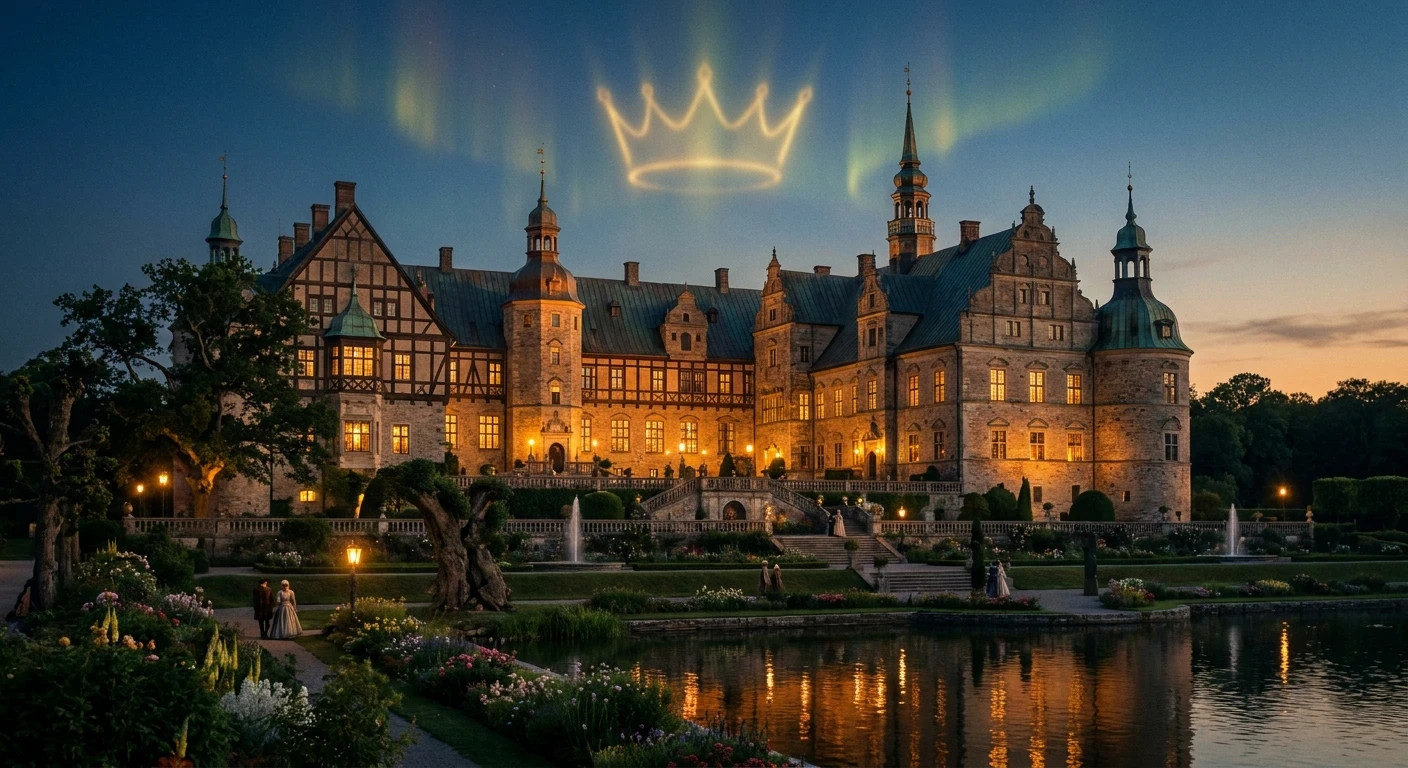
Understanding the Heritage of the Danish Royal Family
Have you ever wondered how one of the oldest continuing monarchies on Earth still manages to capture the global imagination today? The Danish Royal Family stands as a fascinating bridge between ancient Viking heritage and a highly progressive, egalitarian Scandinavian society. Rooted in an unbroken lineage that stretches back over a thousand years, this institution represents far more than just ceremonial grandeur; it serves as a unifying cultural force for the nation. When you look at the Danish Royal Family, you are not just seeing a relic of the past, but a living, breathing component of modern diplomacy, charity, and national identity. King Frederik X, who ascended the throne following the historic abdication of his mother, Queen Margrethe II, in early 2024, exemplifies this seamless blend of tradition and modernity. Accompanied by Queen Mary, he leads a royal house that is affectionately known as a ‘bicycle monarchy’ because its members are frequently spotted cycling through the streets of Copenhagen, sending their children to public schools, and actively engaging with everyday citizens. This remarkable accessibility is precisely what keeps their approval ratings incredibly high. Over the following sections, we will explore exactly how the monarchy functions, the constitutional rules that bind it, its deep historical roots dating back to the Viking kings, and how you can map out a comprehensive journey to experience this regal heritage firsthand.
How the Monarchy Functions Today
The modern function of the monarchy is a masterclass in soft power and cultural representation. While the monarch holds no partisan political authority, their role is essential for the seamless operation of the state apparatus and the promotion of national interests abroad. The core value proposition of the monarchy lies in its ability to provide unwavering stability and a non-partisan focal point for the nation. For example, during times of domestic political transition or international crisis, the monarch acts as a steadying figure who represents the enduring spirit of the country, free from the volatile swings of election cycles. Another prime example is their role in commercial diplomacy; when royal family members travel abroad on official state visits, they routinely lead massive business delegations, opening doors for domestic companies and significantly boosting export opportunities that directly benefit the economy. This unique combination of historical prestige and active civic duty creates a tangible return on investment for the public. To understand who currently drives these initiatives, let us look at the primary working members of the royal household.
Read also: Who is Andrew Mountbatten Windsor? A Royal Profile; The Full Truth About ayelet shaked; Tree of Wisdom Wiggles: The Ultimate Expert Guide.
| Royal Member | Current Role | Notable Patronages |
|---|---|---|
| King Frederik X | Head of State | Military defense, scientific research, climate sustainability |
| Queen Mary | Queen Consort | Women’s rights, healthcare, anti-bullying initiatives |
| Queen Margrethe | Former Monarch | Arts, archaeology, cultural preservation |
| Crown Prince Christian | Heir Apparent | Youth engagement, sports, national heritage |
The daily reality of being a working royal involves a demanding schedule of state duties, philanthropic oversight, and military appointments. To summarize their core responsibilities, the monarch performs several indispensable functions:
- Acting as the official representative of the state during inbound and outbound diplomatic visits, hosting foreign heads of state at grand banquets while simultaneously championing national industries.
- Signing all acts of parliament into law alongside a government minister, formally validating the democratic decisions made by elected officials without influencing the legislative debate itself.
- Serving as the formal head of the defense forces and maintaining thousands of patronages across various charitable, scientific, and cultural organizations to highlight their importance to society.
Origins in the Viking Age
The incredible story of this lineage begins over a millennium ago during the Viking Age, making it one of the oldest monarchies in the world. The historical record firmly establishes Gorm the Old, who reigned in the early 10th century, as the first historically recognized king of a united Denmark. His son, Harald Bluetooth, famously erected the Jelling Stones, massive runestones that are often referred to as the country’s ‘birth certificate.’ These stones boldly proclaim Harald’s achievement in conquering all of Denmark and Norway, and notably, his role in converting the Danes to Christianity. This early period was characterized by fierce warrior kings who ruled by might, expanded their territories across the North Sea, and established a maritime empire that profoundly influenced European history.
Evolution Through the Middle Ages and Absolutism
As centuries passed, the institution evolved from an elective monarchy, where nobles chose the sovereign, into a hereditary system. A pivotal era was the Kalmar Union in 1397, engineered by the brilliant Queen Margrete I, which united Denmark, Norway, and Sweden under a single crown. The structure of power shifted dramatically again in 1660 when King Frederik III introduced absolute monarchy. For over two hundred years, the monarch wielded supreme, unchecked power, claiming a divine right to rule. This period of absolutism left a massive architectural and cultural legacy, as successive kings built extravagant palaces, funded grand scientific expeditions, and established the intricate systems of nobility and honors that still exist in modified forms today. The Oldenburg dynasty, and later its cadet branch the House of Glücksburg, secured the lineage through turbulent wars and shifting borders.
Modern State and Constitutional Monarchy
The transition to the modern era was relatively peaceful compared to other European nations. In 1849, King Frederik VII voluntarily signed the Constitution, ending absolutism and transferring political power to an elected parliament. This visionary concession saved the monarchy from the revolutionary fervor sweeping across Europe at the time. The 20th and 21st centuries saw further modernization, particularly under King Christian X, who became a profound symbol of national resistance during wartime occupation by riding his horse through the capital every day. Later, the immensely popular Queen Margrethe II reigned for 52 years, modernizing the institution visually and culturally before her unexpected but graceful abdication in January 2024. Today, the institution operates strictly within the bounds of a constitutional framework, heavily reliant on the continued consent and affection of the people.
Constitutional Protocols and the Council of State
From a technical standpoint, the intersection of royalty and government operates through a highly structured legal apparatus. The most crucial mechanism is the Council of State (Statsråd). This is the formal body where the monarch, the heir to the throne (if of age), and the cabinet ministers meet to conduct the highest official business of the realm. According to the constitution, legislative authority is vested jointly in the monarch and the parliament. However, this is largely a formal protocol; the monarch does not write laws, veto legislation, or express personal political opinions in public. Every law passed by parliament must receive Royal Assent and be countersigned by a minister to take effect. Furthermore, after a parliamentary election, the sovereign hosts a ‘Queen’s/King’s Round’ where party leaders advise the monarch on who should be appointed to form a new government. The monarch then formally appoints the Prime Minister based strictly on the parliamentary majority, ensuring absolute political neutrality.
The Act of Succession and Titles
The legal framework governing who can wear the crown is defined by the Act of Succession. Originally favoring male heirs, the law underwent a historic transformation. Following a nationwide referendum in 2009, absolute primogeniture was introduced. This means that the eldest child of the monarch inherits the throne regardless of gender, placing princesses on completely equal footing with princes. This progressive shift ensures that the institution reflects modern egalitarian values. Here are several specific scientific and constitutional facts that define the modern institution:
- The sovereign is legally immune from prosecution and cannot be subjected to civil or criminal charges, a concept known as sovereign immunity.
- Members of the royal household do not exercise the right to vote in political elections, deliberately abstaining to maintain their strict non-partisan status.
- The official duties and private household operations are funded by an annual civil list or state grant (appanage) approved by parliament, ensuring transparent financial oversight.
- The monarch must technically be a member of the Evangelical Lutheran Church, as stipulated by the national constitution, serving as the formal protector of the state religion.
Day 1: Amalienborg Palace and the Royal Guards
To truly grasp the scale and history of the monarchy, you can follow a comprehensive seven-day itinerary through their most significant estates. Begin your journey at Amalienborg Palace in the heart of Copenhagen. This architectural marvel consists of four identical classical palace façades surrounding an octagonal courtyard. It serves as the primary winter residence for the sovereign. Time your visit to witness the Changing of the Royal Guard at noon, a spectacular display of precision marching and historic military uniforms. Inside the Amalienborg Museum, you can explore the private studies of previous kings, preserved exactly as they left them.
Day 2: Christiansborg Palace and the Reception Rooms
On the second day, head to Christiansborg Palace, located on the island of Slotsholmen. This colossal structure is unique in the world because it houses all three branches of government: the Parliament, the Supreme Court, and the Ministry of State, alongside the magnificent Royal Reception Rooms. Here, you can walk through the Great Hall, which features breathtaking modern tapestries gifted to Queen Margrethe II, illustrating a thousand years of national history. This is where the monarch hosts magnificent state banquets for visiting foreign dignitaries.
Day 3: Rosenborg Castle and the Crown Jewels
Dedicate your third day to Rosenborg Castle, a beautiful Renaissance castle built by King Christian IV in the early 17th century. Originally a country summerhouse, it now sits within the city limits surrounded by the King’s Garden. The interior offers a journey through time, showcasing opulent rooms heavily decorated with historic art, weaponry, and furniture. The absolute highlight is descending into the heavily guarded treasury vaults beneath the castle to view the Crown Jewels and the spectacular crowns used during the era of absolute monarchy.
Day 4: Kronborg Castle and the Maritime Defenses
Travel north from the capital to the coastal town of Helsingør to explore Kronborg Castle. Famous globally as the setting for Shakespeare’s Hamlet, this UNESCO World Heritage site played a critical role in the monarchy’s historical wealth. For centuries, kings used the fortress to enforce the Sound Dues, collecting taxes from every ship entering or leaving the Baltic Sea. The massive fortifications, royal apartments, and gloomy underground casemates provide incredible insight into the military and economic strategy of past sovereigns.
Day 5: Frederiksborg Castle and the National History Museum
Continue your regional exploration at Frederiksborg Castle in Hillerød. Situated majestically on three small islands in a lake, this sprawling Renaissance complex is visually stunning. Today, it houses the Museum of National History. Walking through its grand corridors, including the magnificent Chapel where absolute monarchs were once anointed, you will find an unparalleled collection of portraits, historical paintings, and artifacts that meticulously detail the chronological history of the royal lineage and the nation itself.
Day 6: Fredensborg Palace and the Royal Retreat
Spend day six visiting Fredensborg Palace, often referred to as the ‘Versailles of the North.’ This beautiful, elegant palace functions as the family’s preferred spring and autumn residence. While the interior is only open to the public during a brief window in the summer, the vast, mathematically precise baroque gardens surrounding the estate are open year-round. It is famous for hosting significant royal family gatherings, including historic summits where the ‘Father-in-Law of Europe’, King Christian IX, would gather his children who were married into royal houses across Russia, Britain, and Greece.
Day 7: Roskilde Cathedral and the Royal Tombs
Conclude your historical immersion in the ancient city of Roskilde. The magnificent brick-Gothic Roskilde Cathedral is the traditional burial site for the monarchs. Since the 15th century, nearly every king and queen has been laid to rest here in spectacularly ornate chapels attached to the main church. Walking among the grand sarcophagi offers a profound reflection on continuity, mortality, and the unbroken chain of succession that ties the modern democratic society to its ancient, sword-wielding past.
Myth: The monarch has absolute political power
Reality: While historical kings wielded absolute authority, the modern sovereign operates entirely within a constitutional framework. They must sign laws, but only after parliament passes them, and a cabinet minister must co-sign for the law to be valid. The monarch holds no independent political power.
Myth: They are fully funded by taxes without ROI
Reality: The state grant funded by taxpayers is heavily offset by the tremendous economic value the family generates. Their role in commercial diplomacy, hosting trade delegations, and promoting tourism brings in revenue that far exceeds their annual budget, making them a net financial positive for the nation.
Myth: The line of succession strictly favors males
Reality: Following a constitutional amendment approved by a public referendum in 2009, the laws of succession were updated to absolute primogeniture. The firstborn child inherits the throne automatically, completely regardless of their gender.
Myth: The royals live completely secluded lives
Reality: The current generation is famous for its accessibility. They regularly participate in public marathons, shop in local supermarkets, and can often be seen dropping their children off at standard public schools using cargo bicycles, maintaining a remarkably grounded lifestyle.
Who is the current King of Denmark?
The current head of state is King Frederik X. He officially ascended the throne on January 14, 2024, following the formal abdication of his mother, marking a new, modernized era for the institution.
When did Queen Margrethe II abdicate?
Queen Margrethe II surprised the world by announcing her abdication during her live New Year’s Eve address on December 31, 2023. She formally stepped down on January 14, 2024, exactly 52 years after she originally took the throne.
Who is Crown Prince Christian?
Crown Prince Christian is the eldest son of King Frederik X and Queen Mary. As the first in the line of succession, he is the heir apparent and will eventually become king. He has already begun taking on official state duties.
Does the monarch pay taxes?
No, according to the national constitution, the ruling monarch and their immediate household are exempt from paying income tax and value-added tax. However, they do pay inheritance and property taxes on private estates they own personally.
How popular is the Danish monarchy?
It remains one of the most popular royal institutions globally. Consistent polling shows that over 70 to 80 percent of the population supports the retention of the constitutional monarchy, valuing its role in maintaining national unity and tradition.
Where do they live?
Their primary winter residence is Amalienborg Palace in Copenhagen. During the warmer months, they relocate to Fredensborg Palace or Marselisborg Palace in Aarhus, and occasionally spend time on the Royal Yacht Dannebrog.
Are they related to the British royals?
Yes, they are closely related. Both royal houses share common ancestry through Queen Victoria of the United Kingdom and King Christian IX of Denmark, meaning the current generations are distant cousins who frequently attend each other’s state events.
Preserving a Living Legacy
The Danish Royal Family represents an extraordinary fusion of historical endurance and contemporary relevance. Far from being an outdated institution, they have continuously adapted to serve the shifting needs of a modern democratic society. By championing charitable causes, driving international trade, and providing a steadfast symbol of national unity, they prove that heritage and progress can coexist beautifully. Whether you are exploring the opulent halls of Christiansborg or simply observing the King cycle through Copenhagen, the monarchy remains an essential part of the cultural fabric. Plan your visit to their historic palaces today and step directly into a living thousand-year-old story!