
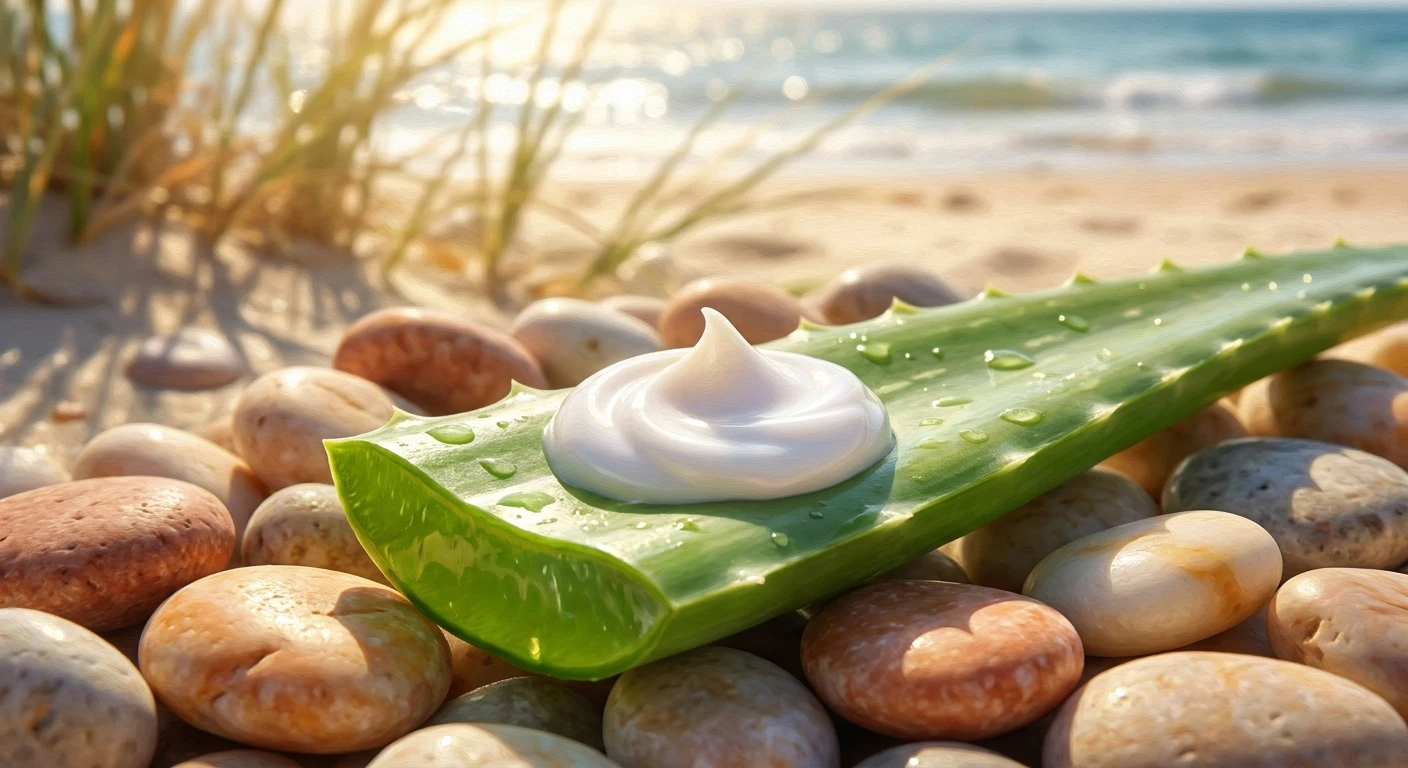
Why You Need Zinc Sunscreen Right Now
Listen, if you aren’t using a quality zinc sunscreen by now, your skincare routine is basically running on empty. Honestly, I used to be that person who just grabbed whatever spray was on sale at the local pharmacy, totally ignoring the ingredients list. I figured as long as it said SPF 50, I was good to go. But let me tell you a quick story that completely changed my perspective.
A couple of summers ago, I took a long-awaited trip down to Odesa, right on the beautiful Black Sea coast of Ukraine. The sun was absolutely blistering, the kind of intense heat that bounces off the sand and hits you twice. I applied my usual chemical lotion, and within twenty minutes, I was sweating, my eyes were stinging like crazy, and my skin felt irritated and flushed. I spent half the beach day rinsing my face with bottled water. That evening, sitting at a local seaside cafe, a friend pulled out a small tube of mineral SPF and explained the difference to me. From that day forward, I ditched the old stuff completely.
The truth is, you absolutely need a physical mineral barrier to block those harsh UV rays before they even touch your sensitive skin cells. Chemical options absorb the light and convert it to heat, which is exactly why my face felt like it was on fire in Odesa. By switching to a mineral-based product, you are literally putting a microscopic shield between you and the sun. Trust me, once you make the switch, you will never go back to the stinging, watery eyes of the past.
The Real Benefits: Why Mineral Beats Chemical Every Time
Let’s talk about why making the switch is the smartest thing you can do for your skin health. The core difference lies in how the active ingredients interact with ultraviolet light. Chemical filters need to be absorbed into your bloodstream to work properly, taking about twenty to thirty minutes before you are actually safe to step outside. A mineral filter, on the other hand, sits right on top of your epidermis. The moment you rub it in, you are protected. It acts like millions of tiny mirrors reflecting the harmful rays away from your body.
Let’s break down the differences clearly:
| Feature | Zinc Sunscreen | Chemical Sunscreen |
|---|---|---|
| Activation Time | Instant protection upon application | Takes 20-30 minutes to absorb |
| Mechanism | Reflects and scatters UV rays | Absorbs UV rays and converts to heat |
| Skin Sensitivity | Soothing, great for acne and sensitive skin | High risk of irritation and allergic reactions |
| Environmental Impact | Generally reef-safe and ocean-friendly | Often contains coral-bleaching chemicals |
The value proposition here is massive. First, you get immediate protection. Imagine running late for a beach volleyball game or a quick outdoor workout; you don’t have to wait in the shade for half an hour. You just apply and go. Second, you are making an environmentally conscious choice. Many popular beach destinations have completely banned chemical filters because they cause severe coral bleaching. By choosing mineral options, you are actively participating in protecting marine ecosystems.
Here are the top 3 reasons you need to switch right now:
- Zero Hormone Disruption: Many traditional chemical filters have been shown to penetrate the skin and enter the bloodstream, potentially mimicking hormones. Mineral options stay exactly where you put them—on the surface.
- Heat Reduction: Because mineral products reflect light rather than absorbing it and turning it into heat, they are significantly better for people prone to hyperpigmentation, rosacea, or melasma.
- Incredible Shelf Stability: Mineral ingredients don’t degrade as quickly when exposed to direct sunlight, meaning your protection remains consistent and reliable throughout your time outdoors.
History and Origins of Sun Protection
Early Origins of Mineral Protection
People have been trying to hide from the sun’s damaging effects for thousands of years. Long before we had fancy tubes and pumps, ancient civilizations intuitively understood that they needed a physical barrier. Ancient Egyptians used heavy botanical oils mixed with crushed clays and minerals to coat their skin against the harsh desert sun. Various indigenous cultures around the world utilized mud, plant pastes, and naturally occurring mineral deposits to create a physical block against the elements. They didn’t know about UVA or UVB rays, but they knew that putting a thick layer of earth on their skin prevented painful burns.
Evolution in the 20th Century
Fast forward to the 20th century, and the concept of physical sunblock became heavily commercialized. If you grew up in the 1980s or 1990s, or even if you’ve just seen old movies, you definitely remember the iconic lifeguard look. I’m talking about the thick, neon-colored or bright white paste slathered over the nose and cheeks. That was pure, unadulterated zinc oxide. It was incredibly effective, but completely impractical for everyday cosmetic use. You couldn’t exactly wear a thick white stripe on your face to a business meeting or a casual lunch date. Because of this cosmetic flaw, chemical formulas dominated the market for decades, offering invisible finishes at the cost of skin irritation and environmental damage.
The Modern State of Mineral SPF
Now, things have radically shifted. Since it’s 2026, we are living in an absolute golden age of skincare technology. Cosmetic chemists have figured out how to micronize mineral particles, making them so incredibly small that they blend flawlessly into the skin without leaving that dreaded ghostly white cast. We now have tinted versions that match every single skin tone perfectly, doubling as lightweight foundations or BB creams. The evolution from thick, chalky lifeguard paste to elegant, silky serums that melt into the skin is nothing short of miraculous. You can now get maximum broad-spectrum protection that actually makes your skin look better, dewier, and more even-toned.
Scientific and Technical Deep Dive
How Physical UV Blocking Actually Works
Let’s get a little nerdy for a second, because understanding the science behind this is genuinely fascinating. When ultraviolet light from the sun hits the earth, it comes in two main forms that we care about: UVA and UVB. UVA rays penetrate deeply into the skin, causing premature aging, wrinkles, and deep cellular damage. UVB rays are the ones that cause immediate sunburns. When you apply a mineral block, you are depositing a layer of inorganic metallic compounds onto your stratum corneum (the outermost layer of your skin). When photons of UV light strike these mineral particles, the particles act like a highly efficient mirror system. They scatter, reflect, and bounce the dangerous light energy away from your body, preventing it from ever interacting with your living DNA.
Particle Size: Nano vs. Non-Nano
One of the biggest debates in the mineral SPF community revolves around particle size, specifically nano versus non-nano particles. A nanometer is incredibly tiny—one billionth of a meter. When brands “micronize” their formulas to make them clear, they sometimes use nano-sized particles. The benefit is an absolutely invisible finish. However, some health advocates prefer non-nano particles. Non-nano means the particles are larger than 100 nanometers. They are physically too large to penetrate the skin barrier or enter the bloodstream, providing peace of mind for those who want completely topical protection. Non-nano is also widely considered safer for marine life, as the larger particles are less likely to be ingested by microscopic ocean organisms.
- Broad-Spectrum Supremacy: Zinc oxide is one of the only active ingredients approved by the FDA that naturally protects against the entire spectrum of both UVA and UVB rays by itself.
- Photostability: Unlike avobenzone (a common chemical filter that rapidly degrades in sunlight), mineral filters are highly photostable. They do not break down when exposed to UV light.
- Inert Nature: Zinc is biologically inert. This means it doesn’t react with other skincare ingredients, making it perfectly safe to layer over your vitamin C serums or retinols.
- Anti-Inflammatory Properties: It is the exact same active ingredient used in diaper rash creams because it actively soothes irritation and reduces redness.
Your Actionable 7-Day Transition Plan
Ready to make the switch? Transitioning from chemical formulas to a high-quality mineral routine takes a little bit of adjustment, mostly because the application texture is different. Here is a super simple, foolproof 7-day plan to get your skin accustomed to its new best friend.
Day 1: The Chemical Purge
Your first step is ruthless decluttering. Go through your bathroom cabinets, beach bags, and car glove boxes. Gather all your old, expired, and chemical-laden lotions. Check the back labels—if you see ingredients like oxybenzone, octinoxate, or homosalate, toss them out. You are making a commitment to better health, and holding onto the old stuff will only tempt you to use it when you’re in a rush.
Day 2: Understanding Your Skin Type
Not all mineral formulas are created equal. Take today to figure out what your skin actually craves. If you have super dry skin, look for a mineral SPF suspended in hydrating oils like squalane or jojoba. If you have oily or acne-prone skin, search for a matte-finish product that includes niacinamide to control sebum production. Finding the right base is the secret to loving your SPF.
Day 3: The Patch Test
Once you’ve purchased your new product, don’t just slather it all over your face immediately. Even though minerals are hypoallergenic, the carrier lotions might contain botanical extracts or preservatives that your skin disagrees with. Apply a small dot behind your ear or along your jawline. Leave it for 24 hours to ensure you don’t experience any redness or breakouts.
Day 4: Mastering the Application Technique
Mineral products require a different technique than standard lotions. You cannot just squirt a huge glob onto your face and frantically rub it in—that’s how you get a white, streaky mess. Instead, squeeze the amount you need onto your fingertips. Rub your fingers together to warm up the formula. This lowers the viscosity of the cream. Then, gently pat and press it into your skin in sections, rather than aggressively rubbing.
Day 5: Reapplication Rules
Today is all about building the habit of reapplication. A single morning layer is not enough if you are spending the day outside. Set an alarm on your phone for every two hours. If you are wearing makeup, this is the perfect time to introduce a mineral SPF setting powder or a lightweight SPF spray that goes seamlessly over your foundation.
Day 6: Double Cleansing Routine
Because physical blocks are designed to sit heavily on the skin and resist water and sweat, regular face wash won’t remove them completely at night. Tonight, introduce a double cleansing routine. Start with an oil-based cleanser or cleansing balm to melt away the stubborn mineral particles. Follow up with your standard gentle water-based foaming cleanser to wash everything down the drain.
Day 7: Evaluating the Results
Look in the mirror. Notice how your skin feels. You will likely see a reduction in baseline redness, fewer clogged pores, and a generally calmer complexion. Celebrate the fact that you’ve successfully upgraded your routine to something healthier, safer, and highly effective.
Myths vs. Reality
There is a lot of misinformation floating around out there. Let’s clear the air and debunk some of the most stubborn misconceptions.
Myth: It always leaves a terrible white cast on dark skin tones.
Reality: Thanks to modern 2026 formulation technology, this is completely outdated. High-quality tinted versions use iron oxides to blend seamlessly into melanin-rich skin, offering a beautiful, glowing finish with zero ashiness.
Myth: You don’t need to wear it if you are staying indoors all day.
Reality: UVA rays—the ones responsible for aging and DNA damage—easily penetrate standard window glass. If you are sitting by a bright window working on your laptop, you are still taking on sun damage. Daily application is non-negotiable.
Myth: Mineral creams are too thick and will cause massive acne breakouts.
Reality: While the carrier oils in cheap brands might clog pores, the active mineral itself is highly anti-inflammatory and non-comedogenic. It actually helps soothe active breakouts and reduces the redness associated with acne.
Frequently Asked Questions
Is it safe for babies and toddlers?
Absolutely. In fact, pediatricians strongly recommend mineral formulas over chemical ones for children under six months, as babies have very sensitive, permeable skin that absorbs chemicals far too easily.
Does it expire?
Yes, it does. While the physical minerals themselves don’t degrade, the carrier lotions, oils, and emulsifiers in the bottle will break down over time. Always check the expiration date, which is usually two to three years from the manufacturing date.
Can I wear makeup over it?
Definitely! You just need to be a little patient. Apply your SPF, let it sit and set for about five to ten minutes, and then proceed with your normal foundation or concealer routine.
Is it truly reef-safe?
Yes, especially if you choose non-nano formulations. By avoiding chemical filters like oxybenzone, you are preventing the hormonal disruption of coral reefs and protecting delicate marine habitats.
Do I need to reapply after swimming?
Yes, always. Even if the bottle says “water-resistant for 80 minutes,” towel drying completely wipes away the physical barrier. You must reapply immediately after getting out of the water.
Why does it sometimes feel greasy?
The greasiness usually comes from the plant oils and silicones used to make the thick minerals spreadable. If you hate the greasy feeling, look for “matte finish” or “fluid” formulations that use lighter, volatile carriers.
Will it stain my dark clothes?
It certainly can. Because it is a white powder suspended in lotion, rubbing your face on dark fabrics can transfer the product. If you get a stain, treat it with an oil-breaking laundry detergent before washing.
Can I use it as a daily moisturizer?
Yes! Many modern products are formulated with hyaluronic acid, ceramides, and peptides, meaning they can easily replace your daily morning moisturizer, saving you a step in your routine.
So, there you have it, guys. The days of stinging eyes, chemical-induced breakouts, and environmental guilt are totally over. Upgrading your sun protection is an absolute game-changer for your daily health and beauty regimen. Grab your perfect tube today, stick to the transition plan, and step out into the sunshine with absolute confidence!