
What Makes james hayward So Fascinating?
If you have ever stared at a canvas so thick with oil paint that it looks like it is physically breathing, you already understand why james hayward is a name you absolutely cannot ignore. I still vividly remember walking through a small, independent contemporary art exhibition near the Golden Gate here in Kyiv a few years back. A local collector had managed to acquire a single piece of his and put it on display. The sheer texture was hypnotic. It was not just regular paint sitting quietly on a flat canvas; it was an architectural structure built entirely out of raw color. People walking past it literally stopped in their tracks, physically leaning in, trying to figure out how the heavy material defied gravity. It was a visceral experience.
I want to chat with you about his highly unique approach to abstract expressionism because it genuinely challenges how we look at flat surfaces. His fierce dedication to monochromatic, heavy impasto techniques is something you do not just look at—you feel it in your bones. We are now well into 2026, and purely digital art is absolutely everywhere, which makes the extreme physicality of Hayward’s work feel incredibly refreshing and deeply necessary. I am going to break down exactly what makes his creative process so remarkably distinct, the historical weight behind those aggressive brushstrokes, and how you can actually train your eye to fully appreciate the pure, unadulterated chaos of his thick oil canvases. Once you get a taste for this kind of extreme texture, your perception of regular flat paintings will be changed forever.
The Core Value of Pure Texture
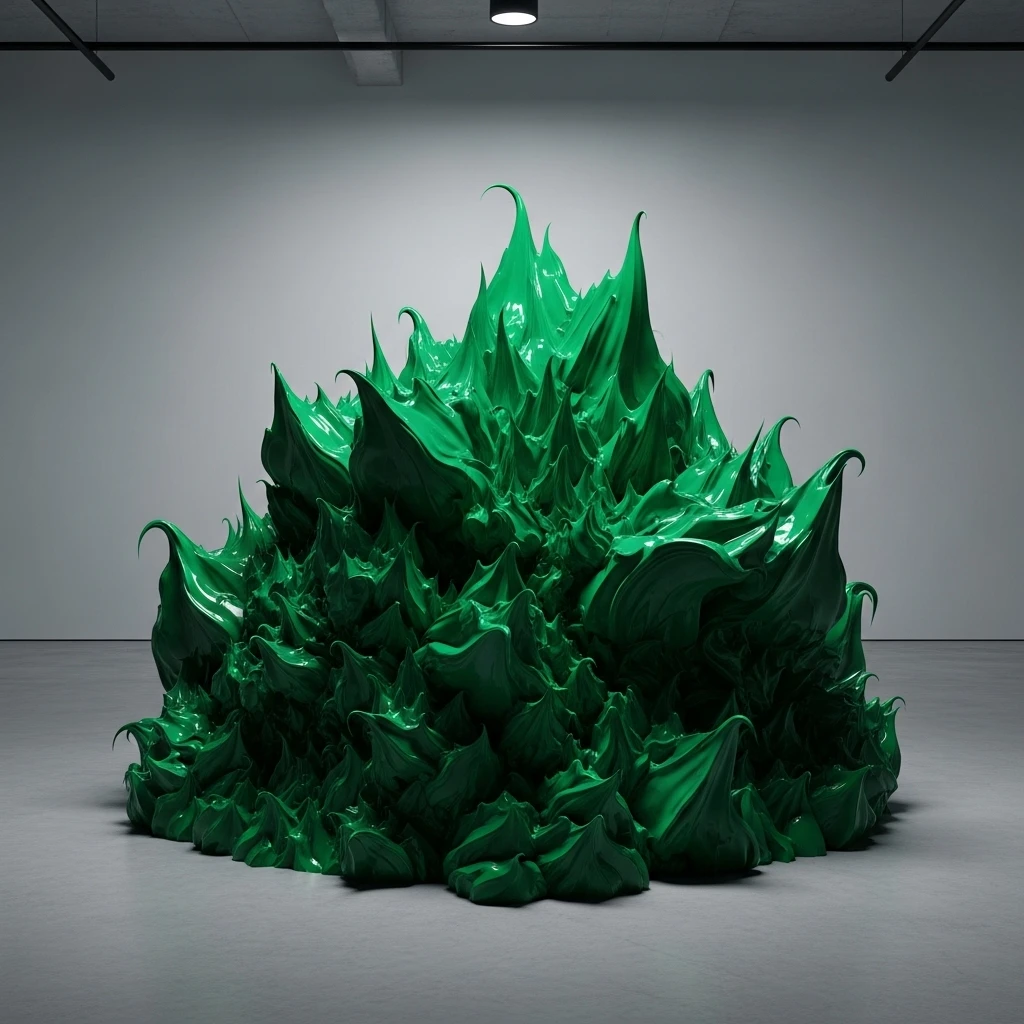
His entire method is fundamentally about pushing the absolute physical limits of traditional oil paint. When you take the time to study his work up close, you quickly realize the core value proposition of his art is simple: absolute tactile immersion. He intentionally removes the distraction of recognizable shapes, figures, or landscapes, and instead, he forces you to confront the raw material itself. For example, in his highly praised asymmetrical monochromatic series, the thick, sculptural peaks of paint catch the ambient light differently depending on the time of day, creating shadows that move across the canvas like a sundial. Another fantastic example is his approach to abstract diptychs, where two heavily contrasting textures sit side by side, creating a silent, powerful visual conversation that you can almost hear.
To truly grasp his massive impact on the contemporary art scene, we have to look closely at the underlying mechanics of his art style. Here is a quick breakdown of his core artistic phases and what they mean for the viewer:
| Artistic Phase | Key Visual Characteristic | Impact on the Viewer |
|---|---|---|
| Early Flat Monochromes | Smooth, unvaried, flawless surface | Encourages meditative, calm contemplation |
| The Transition Period | Slightly raised brushstrokes and marks | Builds a sense of underlying tension |
| Heavy Impasto Era | Thick, aggressive, sculptural layers | Triggers a dynamic, energetic emotional response |
| Multi-Panel Diptychs | Multiple panels of varying extreme textures | Forces complex visual comparison and analysis |
Appreciating this wildly physical painting style brings several surprising benefits to both casual art lovers and dedicated creators alike. Here is why you should care:
- Heightened sensory perception: You literally start noticing the micro-textures in everyday objects around your house after studying his incredibly thick brushstrokes.
- Emotional grounding: The sheer physical weight and undeniable presence of his art forcefully anchor your focus, offering a desperately needed break from the fast-paced scrolling of modern digital media.
- Deeper understanding of color mechanics: By heavily focusing on single, unified hues, you learn how the physical shadows cast by the paint itself create infinite, subtle color variations without him ever switching pigments.
- Appreciation for artistic stamina: You begin to deeply respect the sheer physical labor and muscle power required to manipulate such heavy, stubborn materials.
When you stand directly in front of these massive canvases, the raw volume of material simply demands your absolute, undivided attention.
Origins of His Artistic Journey
Every great creator starts somewhere, and his personal story is deeply rooted in the vibrant West Coast art scene. Back in the late twentieth century, the prevailing trend in the elite art circles was either incredibly strict, cold minimalism or overly commercialized pop art. He actively chose to take a massive detour from both. Instead of painting easily digestible images of soup cans or comic book strips, he decided to look exclusively at the paint itself. He spent years studying the classical techniques of the old masters but felt a massive, undeniable pull toward the purely abstract. His early days in the studio were marked by a strict adherence to perfectly flat, monochromatic surfaces. He wanted to strip away every ounce of narrative, every hint of a story, and leave only the absolute essence of the medium for the viewer to digest.
Evolution into Heavy Impasto
As his career steadily progressed over the decades, creating perfectly flat surfaces was simply no longer enough to satisfy his creative hunger. He began actively mixing massive quantities of beeswax into his oil paints to give them significantly more body and structural integrity. This was a massive, seismic shift in his process. The canvases suddenly became incredibly heavy, with some pieces reportedly weighing over a hundred pounds when fully wet. He threw away standard brushes and began applying the paint with massive industrial spatulas, custom-built trowels, and heavy tools, creating sweeping, aggressive, and highly athletic gestures. It was highly physical, exhausting work, almost resembling a wrestling match with the stubborn medium rather than a delicate painting session. This intense period thoroughly defined his signature style. The heavy paint was violently pushed, pulled, and dragged across the linen, leaving a permanent, frozen record of his physical exertion.
Modern State of His Masterpieces
Fast forward to the present day, and his powerful legacy is firmly cemented in the hallowed halls of major contemporary art museums globally. Wealthy private collectors actively hunt for his highly textured pieces because they stand out so aggressively against the sterile, flat white walls of modern luxury homes. Even as we push further into 2026, where lightning-fast, AI-generated images thoroughly dominate our social media feeds, his visceral, deeply touchable canvases rightfully hold a massive premium in the market. They act as the ultimate, stubborn antithesis to the glowing digital screen. They serve as a loud, unapologetically bold reminder that human hands, raw dirt, smelly oil, and genuine physical sweat still produce the absolute most compelling visual experiences on the planet.
The Physics of Heavy Paint
Let us get a little bit technical about how these massive, heavy paintings actually stay firmly on the wall without simply sliding off onto the gallery floor under their own immense weight. When you stack dense oil paint that ridiculously thickly, you are actively fighting a war against gravity and agonizingly slow curing times. Traditional oil paint absolutely does not dry by evaporation like standard water-based acrylics do; it actually cures through a complex chemical process known as oxidation. If you were to just slap a huge, raw mound of pure oil paint onto a canvas, the outside layer would quickly form a tight skin, but the soft inside would stay completely wet and mushy for literal decades. Eventually, it would severely wrinkle, crack open, or completely fail. To brilliantly solve this nightmare, he physically modifies the fundamental chemical structure of his painting medium. By expertly blending highly specific, secret ratios of raw beeswax and distinct, fast-drying alkyd resins, he drastically alters both the viscosity and the overall oxidation rate of the material.
Understanding Viscosity Modifiers
Viscosity is basically just a fancy scientific word used to describe exactly how thick and sticky a liquid fluid is. Warm honey obviously has a very high viscosity, while plain water has an extremely low viscosity. He meticulously engineers his custom paint mixtures to possess incredibly high viscosity while still somehow remaining totally workable for his massive trowels. Here are a few truly fascinating scientific facts about this demanding process:
- Beeswax stabilization properties: Adding melted wax directly prevents the heavy, separated oil from leaching away from its colored pigment over time, ultimately creating a highly stable, buttery, and structural consistency.
- Manipulated oxidation rates: The unbelievably thick layers of material require a highly controlled, temperature-stable curing environment, routinely taking many months to fully oxidize and harden solidly to the inner core.
- Extreme tensile strength of the canvas: The sheer, crushing physical weight of the modified paint specifically requires using heavy-duty, premium linen canvas, strictly and tightly stretched over specially reinforced, thick wooden stretchers to prevent massive sagging.
- Dynamic light refraction: The sharp, sculptural peaks of the fully dried paint physically bend ambient light very differently than flat paint does, constantly creating deep micro-shadows that shift dynamically as the sun slowly moves across a room.
When you break it down, his daily studio practice is basically a collegiate-level masterclass in raw materials science, cleverly disguised to the public as fine art.
Day 1: Embrace the Monochrome
I genuinely want you to experience his incredible work properly. If you want to systematically train your brain to truly appreciate heavy, abstract expressionism, I highly recommend you follow this simple, actionable 7-day visual diet plan. On your very first day, simply find a high-resolution, zoomed-in image of one of his single-color canvases online. Spend five straight, uninterrupted minutes looking closely at it without swiping away or checking your notifications. Deeply notice how your brain naturally searches frantically for a recognizable pattern where there absolutely isn’t one.
Day 2: Focus on the Micro Shadows
Look at the exact same piece again, but this time around, force yourself to only look at the tiny, dark shadows cast directly by the sharp ridges of the thick paint. This specific exercise forcefully trains your eye to perceive the painting as a three-dimensional sculpture rather than just a two-dimensional flat picture on a screen.
Day 3: Study the Physical Gesture
Try your absolute best to trace the fluid movement of his arm across the surface. Look closely at the aggressive direction of the thick strokes and try to physically imagine the immense muscular force required to confidently push that much heavy, sticky material across the rough canvas in a single, unbroken motion.
Day 4: Compare and Contrast
Pull up a classic, highly detailed Renaissance painting on your phone, then immediately look at his raw abstract work right after. Try to deeply feel the jarring, psychological difference between staring at an illusion of reality versus looking at the unapologetic physical reality of raw, heavy material.
Day 5: Explore the Complex Diptychs
Take some time to look at one of his massive, two-paneled pieces side by side. Ask yourself critically why he specifically chose to pair those two highly distinct textures or colors together. Do they violently clash with each other, or do they somehow strangely complement each other in a subtle way?
Day 6: The Physical Kitchen Mock-up
Grab some basic flour, tap water, and a few drops of food coloring right there in your kitchen. Mix it all up into an incredibly thick, sticky paste and try to smear it evenly on a scrap piece of cardboard using a butter knife. You will immediately, fundamentally understand the sheer difficulty of trying to control heavy, wet mass.
Day 7: Visit a Local Gallery
Finally, get totally off your phone. Go actively hunt down a local art exhibition in your city featuring genuine, heavy impasto work. Seeing physically thick paint strictly in person, perfectly illuminated under professional gallery lighting, brings every single one of these daily lessons together perfectly.
Clearing Up Common Misconceptions
Abstract art naturally always comes with a huge amount of public misunderstandings. Let me quickly clear up a few frustrating things right now.
Myth: Literally anyone, even a small child, could quickly paint something exactly like that in five minutes.
Reality: The extensive physical preparation, the precise chemical mixing of the mediums, and the highly controlled, confident application of these heavy materials easily take many decades of technical mastery to execute perfectly without the thick paint eventually cracking or falling completely off the canvas.
Myth: Monochromatic, single-color paintings are completely flat, boring, and lack any real visual depth.
Reality: Through the use of extreme impasto techniques, the depth on the canvas is entirely literal. The tall ridges physically cast dark shadows, instantly creating a dynamic, living surface that constantly changes its mood based entirely on the lighting in the room.
Myth: It is just random, angry, aggressive splashing of paint on a canvas without any real thought.
Reality: Every single powerful gesture is highly deliberate and meticulously planned. The artist intentionally limits his entire color palette to aggressively force a hyper-focus entirely on the structural, physical, and rhythmic qualities of the brushstroke.
What specific medium does he typically use?
He primarily uses premium, artist-grade oil paint heavily modified with natural beeswax and alkyd resins to reliably achieve his signature, incredibly thick texture.
Are his finished paintings actually heavy?
Yes, absolutely. Due to the massive, sculptural volume of the dense paint used, a single, large canvas can easily be incredibly heavy, sometimes requiring specialized hardware just to hang it on a wall.
Where is the artist originally from?
He is strongly, historically associated with the highly influential California and broader West Coast contemporary art movements that flourished throughout the late twentieth century.
Does he ever paint traditional portraits?
No, he does not. His primary, obsessive focus remains entirely on pure, structural abstract expressionism and the physical properties of the paint itself.
Exactly how long does it take his extremely thick paint to dry?
Because of the extreme, nearly ridiculous thickness of the layers, it can easily take several months or even multiple years for the interior paint to fully chemically cure and harden.
Why does he specifically use melted wax in his process?
The wax fundamentally stabilizes the fluid oil paint, effectively allowing the wet material to strongly hold those massive, dramatic sculptural peaks without slowly melting or severely sagging overnight.
Are his major works officially considered minimalist?
While they definitely completely lack standard narrative subjects or clear figures, their incredibly aggressive physical presence and massive texture actually makes them remarkably maximalist in their pure physical execution.
To wrap things up, the undeniably raw power of his textured canvases serves as a bold, constant reminder of the physical, tactile world around us. His unwavering dedication to extreme texture gently forces us to finally slow down, step back, and really, truly see what is directly in front of us. If you thoroughly enjoyed this deep, comprehensive breakdown of james hayward, absolutely make sure to share this post directly with a passionate, art-loving friend, and please leave a comment down below about your personal favorite abstract piece!