
Understanding Every New York Shooting and Staying Safe
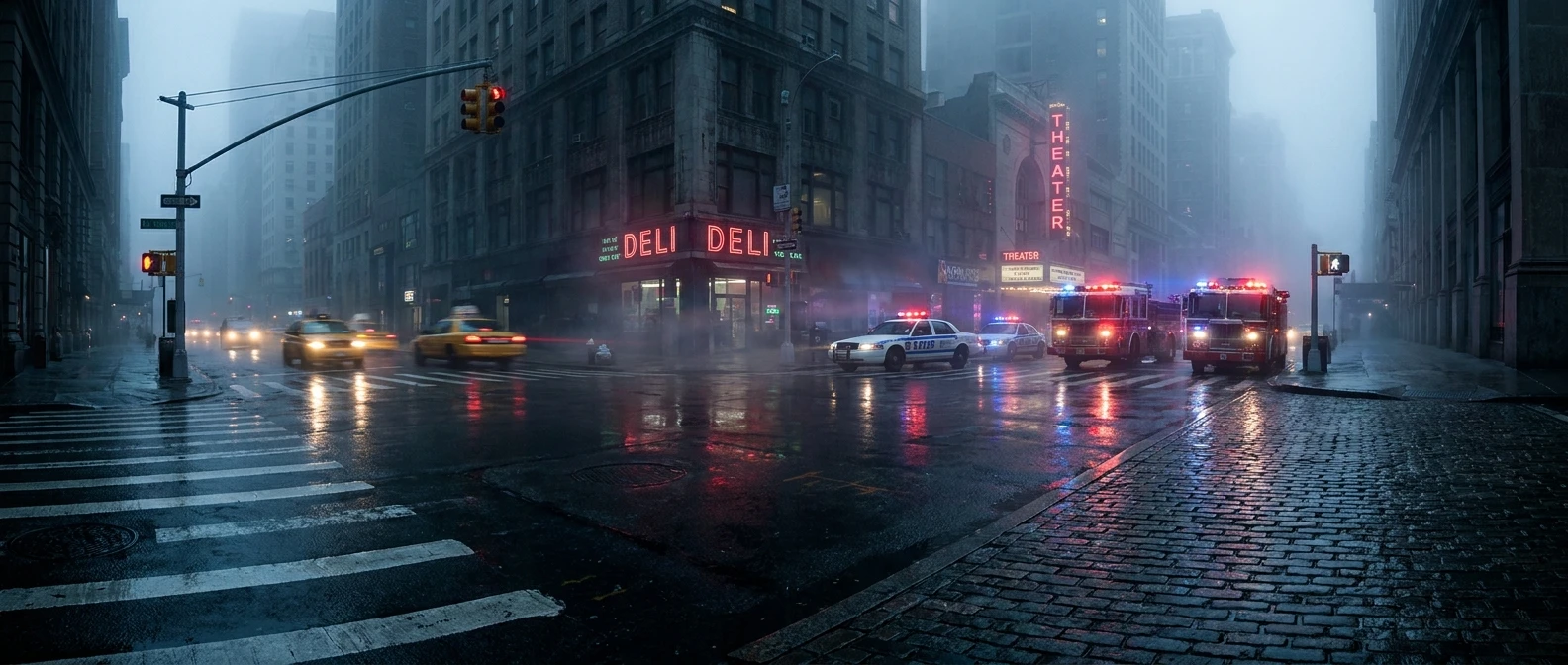
Hey everyone. I’ve been getting tons of DMs about the recent news, and look, we need to chat honestly about what happens when a new york shooting hits the news cycle, because the reality on the ground requires serious street smarts. When that notification pops up on your phone, it is entirely normal to feel an immediate spike in anxiety. The sirens wail, the helicopters circle, and suddenly your familiar neighborhood feels like an unpredictable maze. I totally get it.
Growing up in Ukraine, I learned early on that personal safety isn’t an accident; it is an active, daily habit. We had to develop a sixth sense for shifting environments, reading crowds, and knowing exactly where the exits were before things went sideways. When you move through a massive, breathing metropolis like NYC, that exact same situational awareness becomes your absolute best friend. You cannot control what happens on the streets, but you have 100% control over your reaction. Being prepared doesn’t mean living in fear—it means moving with confidence.
My goal right now is to give you the most practical, no-nonsense breakdown of urban safety possible. We are stripping away the media panic and looking strictly at the reality of navigating the city safely, using hard data and proven survival mechanics.
The True Impact of Urban Incidents
When an incident occurs, the ripple effects hit the community fast. The immediate area locks down, transit gets rerouted, and panic spreads faster than the facts. Understanding the core mechanics of how a crisis unfolds is your greatest advantage. If you know the playbook, you don’t panic; you act.
The value of extreme situational awareness cannot be overstated. Consider two vastly different mindsets on a crowded subway platform. Example A is the commuter entirely glued to their phone, wearing noise-canceling headphones, completely oblivious to a sudden shift in crowd energy. Example B is the commuter who stood with their back to a wall, noted the stairwell locations, and kept one ear open to ambient noise. When chaos erupts, Example B is already moving to safety while Example A is still trying to process what happened. That two-second head start is everything.
Here is a rapid breakdown of urban zones and how you should treat them:
| Urban Zone | Risk Level | Suggested Action |
|---|---|---|
| Transit Hubs (Subway, Stations) | High | Stay near walls; avoid platform edges; map exits immediately. |
| Open Public Parks | Medium | Scan for hard cover like concrete monuments or thick trees; maintain perimeter awareness. |
| Commercial Streets | Low to Medium | Keep moving; avoid tight bottlenecks; use storefront reflections to check your six. |
If you ever hear loud, popping sounds that you even remotely suspect might be gunfire, do not stand around trying to film it for social media. Follow these immediate steps:
- Drop and Assess: Immediately lower your center of gravity. Get down and listen to determine the direction of the noise.
- Locate Hard Cover: Differentiate between things that hide you (bushes) and things that stop bullets (concrete pillars, engine blocks). Move to hard cover.
- Evacuate or Barricade: If there is a clear, safe path away from the noise, take it. If you are trapped indoors, lock and barricade the door, turn off lights, and silence your phone.
The Origins of Urban Crime Spikes
To really grasp what we are dealing with, we have to look back. The gritty reputation of New York didn’t just appear out of nowhere. Back in the 1970s and 1980s, the city faced severe financial crises, crumbling infrastructure, and the massive wave of the crack epidemic. Entire neighborhoods were essentially left to fend for themselves, leading to unprecedented levels of street violence. Those decades forced citizens to develop intense survival instincts, shaping the tough, resilient New York persona we know today.
The Evolution of Law Enforcement Tactics
By the 1990s, things began to shift drastically. The introduction of CompStat completely revolutionized how the NYPD handled crime. Instead of just reacting to calls, they started heavily mapping crime data, holding precinct commanders accountable for localized spikes, and deploying resources to specific hotspots before things spiraled out of control. It was a massive leap forward in proactive policing, moving away from purely reactive patrol methods and bringing data science into the squad car.
The Modern State of NYC Safety
Fast forward through the pandemic disruptions, and here we are in 2026. The landscape has evolved yet again. We are now seeing a highly complex mix of advanced AI surveillance, localized community policing, and rapid response units. While overall statistical trends have generally stabilized compared to the wild fluctuations of the early 2020s, the hyper-visibility of every single incident via citizen apps makes it feel like danger is constantly lurking. The city is mathematically safer than in the 90s, but the perception of danger remains incredibly high.
Acoustic Gunshot Detection Systems Explained
Let’s talk about the tech that runs the city behind the scenes. You’ve probably heard of systems like ShotSpotter. These are networks of highly calibrated acoustic sensors placed high up on rooftops and utility poles across various boroughs. When a loud bang happens, these sensors instantly pick up the audio signature. Using complex triangulation algorithms, the system calculates the exact origin of the sound by measuring the microscopic delays in the time it takes the sound wave to hit different sensors.
The system filters out fireworks, car backfires, and construction noise, zeroing in strictly on the acoustic fingerprint of a gunshot. It then beams the precise GPS coordinates directly to police dispatch within seconds, completely bypassing the need for a 911 call.
The Science of Urban Ballistics
Understanding how sound and projectiles behave in a concrete jungle is frankly fascinating and vital for your safety. A massive city full of skyscrapers acts like a giant echo chamber, completely distorting human perception.
- The Urban Canyon Effect: Sound waves bounce violently off glass and concrete facades. A shot fired straight down a block might sound like it came from an entirely different avenue because of acoustic reflections.
- Speed of Sound vs. Projectile: Most modern bullets travel significantly faster than the speed of sound. This means in a worst-case scenario, the impact actually occurs fractions of a second before the human ear registers the loud “bang.”
- Deflection and Spalling: When a projectile hits concrete or brick, it doesn’t just stop. It fragments. Shrapnel and flying concrete—known as spalling—can cause just as much damage as the primary threat.
Day 1: Baseline Your Commute
Let’s build your 7-day situational awareness protocol. Start today by actively baselining your daily routine. Take your headphones out during your commute. Listen to the normal rhythm of the street, the subway, your office lobby. You need to know what “normal” looks and sounds like before you can instantly spot an anomaly.
Day 2: Identify Exits Everywhere
Make a game out of it. Every single time you walk into a coffee shop, a grocery store, or a theater, force yourself to locate at least two alternative exits that are not the front door you just walked through. Look for emergency stairwells, kitchen doors, or delivery exits.
Day 3: Master Cover vs. Concealment
Train your brain to recognize the difference immediately. A postal drop box? Good cover. A plaster wall inside a retail store? That is only concealment; it hides you but won’t stop anything. A parked car? The tires and engine block are cover; the doors are just concealment.
Day 4: Acoustic Familiarization
Spend a little time watching verified training videos online to learn the actual sound of gunfire. Movies completely lie to us. Real gunfire in a city setting often sounds like a flat, sharp “pop” or a harsh crack, very similar to a heavy pallet dropping or a loud firecracker. Knowing the difference stops you from freezing in confusion.
Day 5: Emergency Comms Setup
Take ten minutes to program your phone. Set up your medical ID. Ensure your emergency SOS features (like pressing the power button five times) are activated. Establish a simple code word with your family that means “I am safe but cannot talk right now.”
Day 6: Tactical Breathing
If panic hits, your heart rate spikes, your fine motor skills vanish, and tunnel vision sets in. Practice box breathing: inhale for four seconds, hold for four, exhale for four, hold for four. This literally hacks your nervous system to lower your heart rate, keeping your brain oxygenated so you can make fast, smart decisions.
Day 7: Run, Hide, Fight Drills
Mentally rehearse the standard protocol. First choice: Run. Get as far away as possible. Second choice: Hide. Barricade yourself, stay out of sight, remain utterly silent. Absolute last resort: Fight. If you are cornered, commit entirely with improvised weapons like fire extinguishers or heavy chairs.
Myths & Reality
Myth: You will always know immediately if it is a gunshot.
Reality: As mentioned, the urban echo chamber totally distorts sound. It almost always sounds like fireworks, construction equipment, or a truck backfiring. Never wait to verify; move away from the sound immediately.
Myth: Hiding behind a car door will protect you.
Reality: Standard car doors are essentially just thin sheet metal and plastic. They are concealment, not cover. The only reliable ballistic cover on a vehicle is the solid steel engine block at the front, or the wheels and axles.
Myth: Crime is completely random and unpredictable.
Reality: While isolated incidents happen, data absolutely proves that the vast majority of urban violence is highly localized to specific micro-hotspots. Knowing your local neighborhood data allows you to plan safer walking routes.
Frequently Asked Questions
What is the safest borough in NYC?
Statistically speaking, Staten Island consistently reports the lowest rates of violent crime, followed closely by specific affluent neighborhoods in Manhattan and Queens. However, safety is hyper-local; it changes block by block.
How effective is ShotSpotter?
It is incredibly fast at dispatching police to a specific location without relying on citizen calls. However, critics argue it sometimes leads to over-policing in specific areas. From a pure response-time metric, it works very well.
Can I carry pepper spray in NYC?
Yes, but there are strict rules. You must be over 18, have no felony convictions, and you can only buy it from a fully licensed firearms dealer or authorized pharmacy within the state. You cannot order it online to be shipped here.
What time do most incidents occur?
Data consistently shows spikes in urban violence during the late evening and early morning hours, particularly between 10 PM and 3 AM, peaking heavily on weekends.
How does the NYPD respond to active threats?
The NYPD deploys specialized units like the Strategic Response Group (SRG) and Emergency Service Unit (ESU). These officers are heavily armed, wear specialized tactical gear, and are trained to neutralize threats rapidly without waiting for backup.
Are subway stations safer now?
With increased police presence, bag checks, and new camera installations in 2026, transit authorities have heavily bolstered security. Still, maintaining your personal situational awareness underground remains non-negotiable.
What should I pack in an urban survival kit?
Keep it extremely light. A high-lumen tactical flashlight, a genuine tourniquet (and the knowledge to use it), a backup battery bank, and a small first aid kit easily fit into an everyday carry bag.
Wrapping Up
Staying safe in the city isn’t about paranoia; it is about empowerment. When you understand the realities behind every new york shooting alert, you stop being a passive bystander and become the architect of your own security. Take control, practice these habits, and share this knowledge with your friends. Stay sharp, stay aware, and look out for one another out there!