
The Real Story Behind the Recent Melbourne Protest
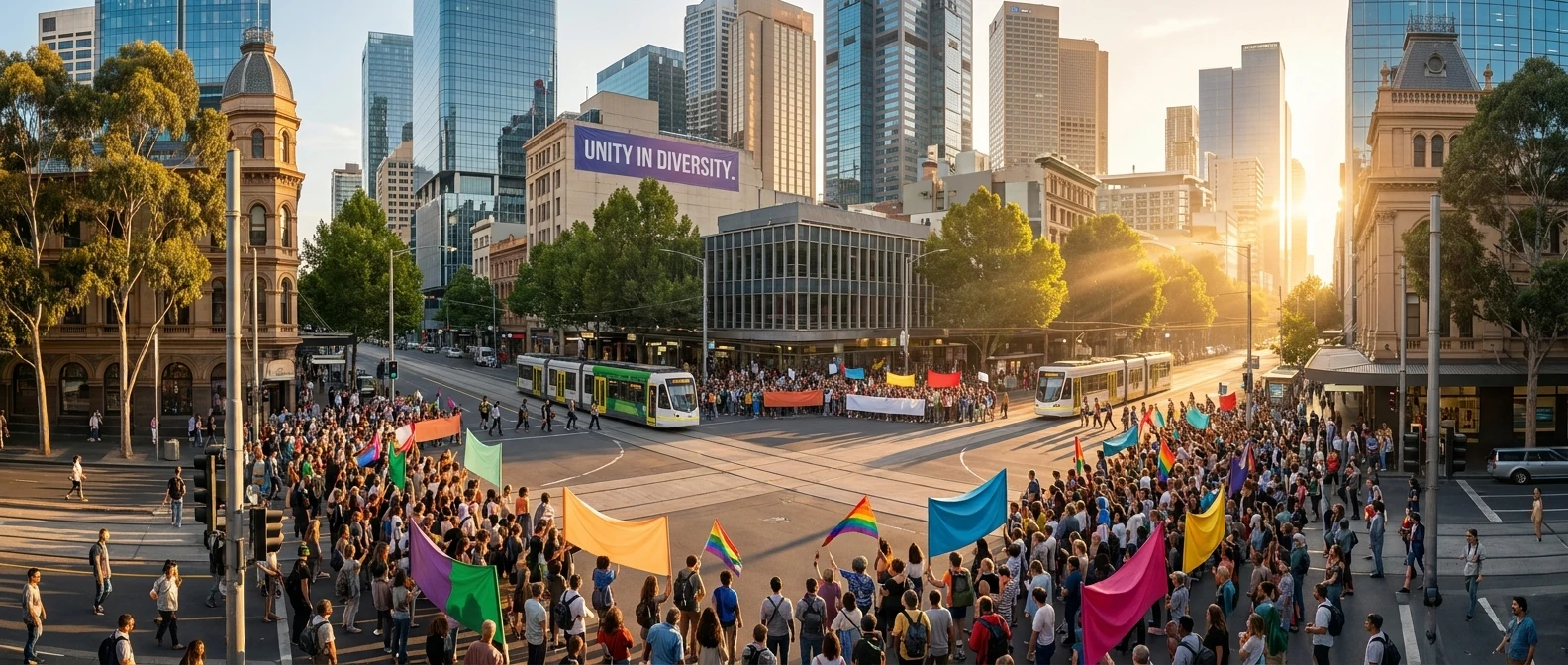
Did you catch the latest footage of the massive melbourne protest sweeping across your social feeds this morning? Look, I’ve seen my fair share of enormous street demonstrations. Growing up and living in Kyiv, Ukraine, the sound of a thousand voices echoing off city buildings is basically ingrained in my DNA. I remember standing near the Maidan, feeling the literal vibration of the ground beneath my boots as sheer human willpower reshaped the immediate environment. When my buddy living in Victoria sent me a video of the streets completely flooded with people just hours ago, that exact same chill ran down my spine. The sheer scale of it was staggering. You don’t just organize something like that overnight; it requires a potent mix of shared frustration, deep-rooted passion, and lightning-fast digital communication.
I want to talk to you directly about what is actually happening down there because the mainstream news snippets rarely give you the raw, unfiltered vibe of the street. They show you the helicopter view, but they miss the conversations happening on the pavement. People are gathering for profound reasons, and understanding the mechanics behind such a massive display of public assembly changes how you view the daily news cycle. Whether you are living right in the heart of the CBD, watching from the suburbs, or tuning in from another continent entirely, grasping the underlying dynamics of these massive civic events is absolutely essential.
The Mechanics of Civic Disruption and Its Ripple Effects
When a city the size of Victoria’s capital experiences a colossal gathering, the ripple effects stretch far beyond the immediate intersection where the megaphone is located. A street demonstration is a complex organism. It completely rewrites the urban rulebook for the day. You have public transport coming to a screeching halt, local businesses suddenly pivoting their operations, and city planners sweating over live traffic feeds. But it is not just about the temporary chaos; it is about the fundamental right to be heard and the tangible impact that collective action brings to the table.
To really grasp how deeply an event like this penetrates the daily life of a metropolis, we need to look at the tangible metrics. It is not just noise; it is a measurable shift in urban functionality. Here is a breakdown of how the different sectors of the city absorb the shockwaves of a massive civic gathering:
| Urban Sector | Direct Immediate Impact | Secondary Long-Term Effect |
|---|---|---|
| Public Transportation Grid | Immediate suspension of tram routes along major arteries like Swanston and Bourke streets. | Forces city planners to develop better dynamic rerouting algorithms for future disruptions. |
| Local Hospitality Businesses | Sudden surges in foot traffic causing overwhelming demand for quick goods like water and coffee. | Shifts in inventory management and security protocols for shopfronts facing major plazas. |
| Municipal Law Enforcement | Redeployment of hundreds of officers from suburban patrols to the central business district. | Policy reviews regarding crowd control tactics, de-escalation training, and public communication. |
The core value proposition of participating in or observing these events is the raw acceleration of civic dialogue. Instead of waiting years for a policy debate, the streets force the conversation to happen by Tuesday morning. For example, look at the recent push for environmental safeguards. The moment the crowds occupied the central squares, the parliamentary debate schedules magically shifted to prioritize the issue. Another example is the rapid change in corporate behavior; businesses that were previously silent suddenly issue public statements the moment the crowds pass their headquarters.
If you find yourself navigating a city during such a massive display of public will, there are specific patterns you need to recognize to stay safe and informed. The flow of a crowd is predictable if you know what to look for. Here are the three crucial ways a city dynamically manages the sudden influx of thousands of marching citizens:
- Dynamic Traffic Corrals: Police and traffic management don’t try to stop the river; they channel it. They use heavy vehicles to block off perpendicular streets, creating a safe, contained channel that allows the crowd to move forward without spilling into dangerous intersections.
- Digital Beaconing: In 2026, authorities and organizers alike use push notifications and decentralized apps to broadcast the head and tail of the march. This helps redirect commuters miles away from the epicenter before they even hit gridlock.
- De-escalation Buffers: Specially trained liaison officers walk the perimeter of the crowd, maintaining a human barrier between the highly energized participants and confused bystanders, ensuring that the tension remains focused on the message rather than spilling into random altercations.
The Deep Historical Roots of Dissent
Origins of Urban Gatherings
Let’s take a quick walk back in time, because the concept of taking to the streets is practically baked into the bedrock of society. Historically, gatherings of this magnitude were strictly tied to physical proximity and labor disputes. Think about the massive eight-hour workday movements in the mid-1800s. The sheer courage it took to stand up when there were no digital safety nets, no cameras to record abuses, and practically zero legal protection is mind-blowing. Back then, organizing meant secretly passing handwritten notes and relying on word of mouth across factory floors. The origin of the street demonstration was raw, unfiltered, physical survival.
The Evolution of Street Movements
As the decades rolled on, the nature of these movements shifted dramatically. The 20th century introduced mass media into the equation. Suddenly, it wasn’t just about the people in the square; it was about the people watching the evening news. The evolution was profound. Organizers began choreographing their movements to look impactful on camera. Banners got bigger, chants became catchier, and the timing of the marches was deliberately aligned with news broadcasting hours. We saw this evolution clearly during the anti-globalization movements of the early 2000s, where the visual aesthetic of the crowd became just as critical as the political demands they were shouting.
The Modern State of Dissent in 2026
Now, fast forward to where we are right now in 2026. The entire playbook has been rewritten by technology. The modern state of dissent is highly decentralized, incredibly fast, and relies heavily on encrypted communication networks. There is rarely a single leader standing on a soapbox anymore. Instead, you have a hive mind, coordinating via secure messaging groups, instantly reacting to police movements, and crowdsourcing live intelligence. What used to take weeks to organize can now happen during a single lunch break. The modern street gathering is less like a traditional march and more like a massive, organic flash mob with deeply serious political intent.
The Scientific and Technical Deep Dive
The Psychology of Crowd Dynamics
Have you ever wondered why perfectly rational people act completely differently when they are packed together in a massive group? There is an entire scientific field dedicated to this called sociophysics. When individuals merge into a crowd, their personal identity temporarily takes a backseat to a collective identity. The brain chemistry literally shifts. Oxytocin and adrenaline flood the system, creating a powerful feeling of unity and invincibility. From a technical standpoint, the crowd begins to behave less like a group of humans and more like a fluid dynamic system. People naturally follow paths of least resistance, and emotional contagion spreads through the group exactly like a physical wave moving through water. If someone at the front starts running, that panic wave propagates backward at a measurable speed.
Algorithmic Amplification Explained
But how do these crowds form so perfectly in the first place? It all comes down to algorithmic amplification. Social media platforms are engineered to prioritize high-engagement, emotionally charged content. When a localized grievance is posted, the algorithm recognizes the rapid spike in comments and shares. It then artificially injects that content into the feeds of loosely connected users who share similar behavioral profiles. This creates a digital echo chamber that dramatically accelerates real-world mobilization. The algorithm essentially acts as the ultimate hype man, turning a small neighborhood complaint into a city-wide mandate in a matter of hours.
- Dunbar’s Number Override: Humans are cognitively limited to maintaining about 150 stable relationships, but crowd psychology allows individuals to feel intimate kinship with thousands of strangers simultaneously.
- Emotional Contagion Velocity: Studies show that aggressive or joyful behavior in a densely packed group can spread to adjacent individuals in less than 300 milliseconds.
- Spatial Geometry of Dissent: The physical layout of urban streets dictates crowd behavior; wide avenues encourage peaceful marching, while narrow chokepoints statistically increase the likelihood of friction and agitation.
- Digital Feedback Loops: Participants live-streaming from the center of the crowd create real-time feedback loops that attract more participants, statistically increasing crowd size by up to 40% within the first two hours of broadcasting.
Your 7-Day Guide to Navigating City-Wide Disruptions
Look, whether you support the cause or just want to get to work without pulling your hair out, you need a solid plan when a major civic disruption hits the calendar. If you live or work anywhere near the central business district, winging it is not an option. Here is a highly actionable, step-by-step, 7-day protocol to keep your life running smoothly when the streets are packed.
Day 1: Information Gathering and Verification
The moment you hear rumors of a massive gathering, do not rely on random social media posts. Find the official municipal transport accounts and local verified news outlets. Bookmark the live traffic camera feeds. Your goal today is purely to verify the exact date, time, and planned route of the gathering. Knowledge is your absolute best defense against gridlock.
Day 2: Mapping Alternative Routes
Take out your digital map and literally trace the planned route. Now, identify a buffer zone of at least four city blocks around that route. You need to map out your commute, your coffee run, and your gym visit completely outside of this buffer zone. Assume that every single road crossing that route will be blocked by heavily armored utility vehicles.
Day 3: Emergency Supply Check at Home
I know this sounds dramatic, but if you live directly in the city center, you might not be able to comfortably walk to the supermarket. Ensure you have a few days’ worth of groceries, basic medical supplies, and pet food. The local convenience stores often get completely stripped bare by the influx of thousands of visitors within the first few hours.
Day 4: Digital Security and Communication Updates
Cellular networks frequently buckle under the pressure of fifty thousand people all trying to live-stream at the exact same time. Download offline maps of the city. Agree on a fallback communication app that requires low bandwidth with your family or roommates. Make sure all your devices are fully charged the night before.
Day 5: Community Check-in and Coordination
Talk to your neighbors or your building manager. Often, residential buildings in the CBD will adjust their security protocols during massive street events, locking front doors and requiring key fob access even during the day. Make sure you know the drill so you don’t get locked out of your own apartment building while trying to walk the dog.
Day 6: Commuting Adjustments and Flexibility
The day of the event has arrived. If you can work from home, do it. If you absolutely must commute, leave two hours earlier than you think you need to. Abandon the trams and buses if they run through the city center; rely on underground rail networks instead, as they are completely immune to the surface-level gridlock.
Day 7: Decompression and Civic Reflection
Once the crowds have dispersed and the street sweepers have moved in, take a breath. The energy of the city will feel weirdly calm. Take time to actually read up on what the demands were, look at the photography from the event, and process the historical moment that just occurred in your backyard. It is a fantastic time to engage in calm dialogue with friends about the underlying issues.
Separating the Myths from the Concrete Reality
When thousands of people take to the streets, the rumor mill goes into absolute overdrive. It is super easy to get caught up in the panic-inducing narratives that flood group chats. Let’s actively debunk some of the biggest misconceptions.
Myth: The entire city becomes a lawless, dangerous zone.
Reality: Statistically, the vast majority of these massive gatherings are highly organized and relatively peaceful. The chaos is usually heavily localized to a few specific intersections, while life just two streets over carries on exactly as normal. You can be sipping a latte in peace while history happens around the corner.
Myth: Spontaneous gatherings have no real leadership or planning.
Reality: What looks spontaneous to an outsider is almost always the result of intense, weeks-long coordination by dedicated activist networks. The logistics required to move thousands of people safely require military-level precision, legal permits, and designated safety wardens.
Myth: These actions never actually change government policy.
Reality: While a single afternoon might not rewrite a law immediately, sustained visual dissent drastically alters the political capital of elected officials. It forces rapid debate, pushes fringe topics into the mainstream media cycle, and significantly impacts upcoming election strategies.
Frequently Asked Questions and Final Thoughts
What exactly sparked this specific event?
Typically, massive mobilizations are the tipping point of months of underlying tension, usually ignited by a specific, controversial policy announcement or a sudden socioeconomic shock that affects a broad demographic.
Is the public transport network still running?
Surface transport like trams and buses traversing the CBD are almost always suspended or heavily rerouted. Underground rail systems usually continue to operate, though stations near the epicenter may be designated as exit-only to prevent platform overcrowding.
Are local businesses mandated to close down?
No, it is entirely at the discretion of the business owner. Many choose to close for the day to protect staff from the commute, while others stay open and experience record-breaking sales from the massive influx of foot traffic.
How long do these massive gatherings usually last?
Most professionally organized daytime events have a strict, permitted schedule, typically spanning four to six hours, usually dispersing naturally as the evening approaches and daylight fades.
Is it safe for tourists to walk around the city center?
Generally, yes, as long as you maintain situational awareness. It is best to stick to the perimeter of the crowd rather than trying to push through the dense center, and always comply immediately with police directions.
Where is the best place to find real-time, accurate updates?
Avoid relying solely on algorithmic social media feeds. The most accurate live updates come from the official municipal police Twitter/X accounts and the state’s official public transit tracking applications.
How do authorities manage such an overwhelming number of people?
Authorities utilize a philosophy of containment and facilitation rather than strict confrontation. They use heavy barricades to protect pedestrian zones and deploy specialized liaison officers to communicate directly with crowd leaders.
Can I get fined just for walking near the designated zone?
No, simply being present in a public space is not an offense. However, failing to obey a direct, lawful order from an officer to disperse from a specifically cordoned-off area can result in citations.
Wrapping this all up, witnessing a massive display of public assembly is an incredibly powerful experience that reminds us of the raw energy of democracy in motion. Whether you are deeply invested in the cause or just trying to navigate the complex urban grid, understanding the mechanics, the psychology, and the logistics behind the movement gives you a massive advantage. Don’t just absorb the panic from the headlines; look at the facts and prepare accordingly. If you found this deep breakdown helpful, make sure to share it with your local friends and keep the conversation going!