
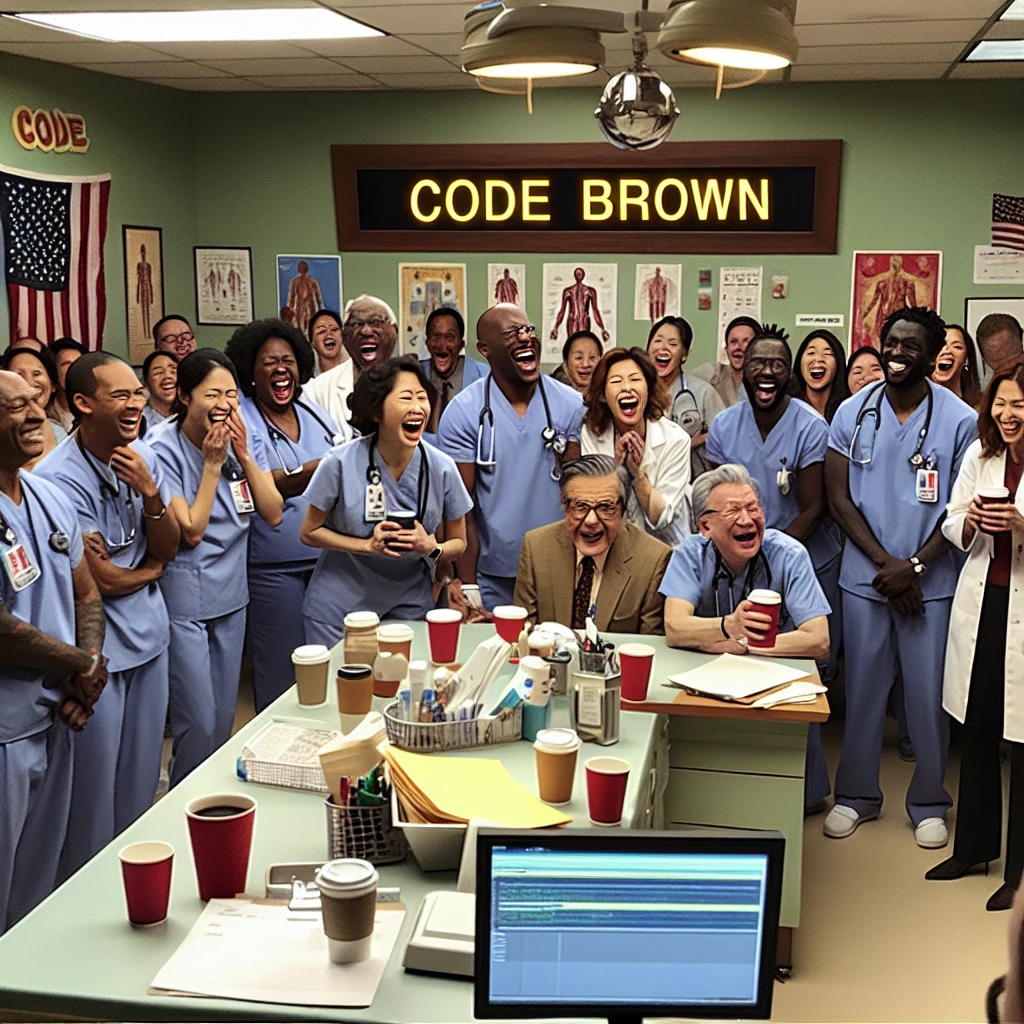
What Exactly is a Code Brown?
Have you ever wondered why a group of seasoned medical professionals will suddenly freeze, exchange a knowing glance, and sprint down the hospital hallway whispering about a code brown? Trust me, this is not a drill, and it definitely is not a coffee break. When I was managing internal communications for a bustling regional clinic in Kyiv a few years back, I witnessed my first true incident of this nature. A seemingly quiet Tuesday afternoon in the gastroenterology ward instantly shifted gears into a highly coordinated, albeit extremely messy, tactical response mission. A patient had experienced a severe, sudden bowel incident that compromised both the bed and the surrounding floor space.
I remember standing near the nurse’s station, watching the sheer efficiency of the team. They didn’t panic; they executed a well-rehearsed protocol. This isn’t just some funny internet meme or slang you see on medical comedy shows. It is a legitimate, highly structured workflow designed for a hazardous, highly infectious situation. The reality of patient care is that human bodies are unpredictable, and managing bodily fluids requires absolute precision to protect both the vulnerable patient and the healthcare workers. Today, I want to share exactly how these messy situations are managed, why they matter, and the hidden science behind the cleanup.
The Core Reality of Biohazard Containment
At its core, a code brown refers to a catastrophic fecal incontinence event or a severe plumbing failure involving raw sewage within a clinical setting. While different hospitals might use variations of this slang, the universal meaning is clear: there is a significant biological spill that requires immediate, specialized attention. The primary goal is twofold: protect the patient’s dignity and prevent the spread of virulent pathogens across the facility.
Let’s look at how this compares to other common hospital alerts. The infrastructure of medical emergency codes relies heavily on color to convey instant meaning without causing panic among visitors.
| Alert Type | Primary Meaning | Required Immediate Action |
|---|---|---|
| Code Brown | Severe biological/fecal spill or sewage leak | Contain perimeter, page environmental services, secure patient |
| Code Blue | Cardiopulmonary arrest | Initiate CPR, dispatch resuscitation team immediately |
| Code Yellow | Missing patient or clinical hazard | Lockdown exits, initiate search grid protocols |
The value proposition of having a strict, silent protocol for this specific emergency is massive. First, consider the psychological impact on the patient. For example, if an elderly patient in a geriatric ward loses bowel control, broadcasting ‘Cleanup needed in Room 12’ over the PA system is humiliating. A discreet code alerts the right personnel while preserving the patient’s dignity. Second, consider a catastrophic plumbing failure in an Intensive Care Unit. Rapidly executing this protocol prevents contaminated water from reaching sterile equipment, effectively saving lives.
When an incident happens, the immediate response follows a strict triad of actions:
- Assess the blast zone: Determine the radius of the spill and immediately block foot traffic to prevent tracking bio-waste into the corridors.
- Secure the patient: Move the affected individual to a clean, safe area, typically an adjacent shower facility, while maintaining a calm, reassuring demeanor.
- Activate the cavalry: Ping the specialized environmental services (EVS) team equipped with the heavy-duty gear necessary for full sterilization.
Origins of Hospital Color Codes
The Early Days of Emergency Alerts
The history of color-coded alerts in medical facilities is surprisingly fragmented. Back in the 1970s and 1980s, every hospital practically had its own language. A fire might be ‘Code Red’ in one building and ‘Dr. Firestone’ in another. It wasn’t until the late 1990s that healthcare associations began pushing for standardization to prevent confusion among travel nurses and rotating residents. The primary colors like Red (Fire), Blue (Medical Emergency), and Black (Bomb Threat) were strictly defined and codified into national hospital association manuals.
Evolution of the Code Brown
Unlike Code Blue, the brown alert was rarely written into the official administrative handbooks of the early 2000s. It evolved organically as grassroots slang among nursing staff. Because managing massive fecal incidents is such a routine yet chaotic part of floor nursing, staff needed a shorthand that quickly conveyed the severity of the mess without horrifying nearby visitors. Over the decades, what started as a whispered joke at the nurse’s station gradually became a semi-official term. Facility managers began incorporating it into localized training modules, recognizing that sewage backups and severe patient accidents required a specialized tier of janitorial response.
Modern State in 2026
Now that we are solidly in 2026, the protocol has gone entirely high-tech. We aren’t just relying on nurses shouting down the hall anymore. Modern smart hospitals are equipped with advanced IoT (Internet of Things) biosensors. Smart beds can instantly detect severe moisture and chemical changes, automatically sending a silent alert to the smartwatches of the designated environmental technicians. AI-driven dispatch systems map out the quickest route for the cleanup crew, ensuring they arrive with the exact enzymatic cleaners needed for the specific pathogen profile of the ward. It is a seamless, digitally orchestrated ballet of sanitation.
The Biology of Biohazards
Understanding the Invisible Threat
To truly grasp why a massive fecal spill triggers such an intense response, you have to understand the microscopic battlefield. Human waste in a clinical setting is vastly different from a mess at home. Hospital environments are breeding grounds for superbugs. The most notorious villain here is Clostridioides difficile, commonly known as C. diff. This specific bacterium causes severe gastrointestinal issues and is shed in massive quantities during a bowel event. The terrifying part about C. diff is its ability to form protective spores that can survive on hard surfaces like bed rails, floors, and IV poles for months if not properly eradicated.
Advanced Sterilization Mechanics
You cannot just wipe down a hospital spill with bleach and call it a day. The organic matter—proteins, fats, and cellular debris—creates a physical barrier that shields bacteria from standard disinfectants. This is where advanced chemistry enters the chat. In 2026, EVS teams utilize hospital-grade enzymatic detergents. These solutions contain active proteases and lipases, which literally digest the organic matter on a molecular level. Once the biological shield is dismantled, industrial-grade sporicidals are applied to obliterate the naked bacteria and spores.
Let’s look at the hard scientific facts behind the cleanup process:
- Spore Survival Rates: C. diff spores can survive without a host on dry surfaces for up to five months, requiring friction-based mechanical cleaning, not just chemical spraying.
- Enzymatic Action: Protease enzymes break down the peptide bonds in feces within exactly 3 to 5 minutes of contact time.
- Cross-Contamination Vectors: Studies show that a single contaminated shoe tread can spread infectious spores across 400 square feet of hospital flooring within ten minutes.
- Sanitizer Failure: Alcohol-based hand rubs are entirely ineffective against C. diff spores; strict soap and warm water friction is scientifically mandated.
A Robust Step-by-Step Guide to Management
Handling this specific emergency requires surgical precision. Whether you are a new nursing graduate or an operations manager, you need a flawless execution plan. Here is the strict 7-step protocol utilized by top-tier facilities in 2026.
Step 1: Immediate Perimeter Containment
The very first second the incident occurs, you must freeze the scene. Close the patient’s door to contain airborne odors and pathogens. If the incident occurred in a hallway, immediately place wet floor signs and physical barricades at a 10-foot radius. Nobody walks through the splash zone—not doctors, not visitors, nobody.
Step 2: Securing Patient Dignity
Your patient is likely embarrassed, frightened, and uncomfortable. Approach them with a calm, normalized tone. Say something reassuring like, ‘Don’t worry, this happens all the time, let’s get you comfortable.’ Wrap them in clean secondary linens to contain the mess against their body, preventing further drips.
Step 3: Safe Evacuation to the Wash Zone
Carefully transfer the patient to a designated decontamination shower or a clean commode area. Use slide boards if they are immobile. The goal here is swift movement without creating a secondary trail of bio-waste across the room.
Step 4: Dispatching the EVS Strike Team
Using the internal comms system or smart-badge, page the Environmental Services team. Specify the exact nature of the spill so they know to bring the specialized enzymatic foam, the sporicidal wipes, and the heavy-duty biohazard disposal bags.
Step 5: The Enzymatic Pre-Soak
While EVS is en route, staff should perform a preliminary gross cleanup if safe. Once the tech team arrives, they will apply an enzymatic pre-soak directly onto the floor and bed frame. This chemical foam must sit undisturbed for exactly five minutes to digest the solid proteins.
Step 6: Biohazard Waste Disposal
All soiled bed linens, gowns, and towels cannot go into standard laundry chutes. They are placed in specialized red, melt-away biohazard bags. These specific bags are designed to be thrown directly into industrial washing machines where the outer plastic dissolves in 160-degree water, preventing anyone from having to touch the contaminated fabric again.
Step 7: Post-Incident Debriefing and UV Sweep
After the physical cleanup is complete, the room undergoes a final sweep using an autonomous UV-C light robot. This machine pulses high-intensity ultraviolet light to destroy any lingering aerosolized DNA. Finally, the nursing team briefly logs the incident to monitor the patient for ongoing gastrointestinal distress.
Myths vs. Reality
Because this topic is heavily discussed on social media and medical forums, a lot of misinformation has spread. Let’s clear up the confusion.
Myth: It is a federally recognized, universal hospital code.
Reality: While highly popular, it remains a colloquial, unofficial slang term in most regions. Official dispatchers usually log it as a ‘Level 2 Biohazard Spill.’
Myth: Only nurses are forced to clean it up.
Reality: Nurses handle the immediate patient care, but the actual deep cleaning of the physical environment is handled by highly trained, certified Environmental Services technicians who specialize in hazardous waste.
Myth: Hand sanitizer is enough to clean your hands after an incident.
Reality: Absolutely false. Alcohol rubs do not penetrate the protective shell of gastrointestinal spores. Vigorous scrubbing with soap and water is the only scientifically valid method.
Myth: These incidents only happen in elderly care wards.
Reality: They happen constantly in Emergency Rooms, pediatric units, and labor/delivery floors. Illness knows no age limit.
Frequently Asked Questions
What triggers this specific code?
It is triggered by large-scale fecal incontinence, severe vomiting that covers a wide radius, or major infrastructure failures like a sewage pipe bursting in a patient care area.
Is the term offensive to patients?
No, because it is designed to be spoken discreetly among staff. The very purpose of using a color code is to prevent the patient from feeling singled out or embarrassed in front of a crowded floor.
Can visitors help with the cleanup?
Never. Visitors lack the necessary personal protective equipment (PPE) and training. If they try to help, they risk contaminating their clothes and spreading dangerous pathogens outside the hospital.
How long does the cleanup process take?
Depending on the severity, a full decontamination, including enzymatic soaking and UV-C light sweeping, takes between 20 to 45 minutes.
Do all hospitals use this exact phrase?
Not all. Some facilities strictly forbid colloquial codes and mandate plain-language alerts like ‘Bio-spill, Room 4.’ However, the slang remains universally understood by medical staff.
Are specialized hazmat suits required?
Standard PPE—gloves, gowns, shoe covers, and face shields—is usually sufficient. Full hazmat gear is only deployed if the spill involves highly exotic or unknown hemorrhagic pathogens.
How has tech changed the response in 2026?
The integration of smart textiles and robotic UV cleaners has drastically reduced response times. Staff are alerted before the mess spreads, minimizing the risk of facility-wide outbreaks.
Final Thoughts
Next time you are walking through a medical facility and hear a hushed conversation about a code brown, you will know exactly what is happening behind the scenes. It represents a massive, highly technical effort to maintain hygiene, dignity, and safety in an inherently messy profession. The dedicated men and women who rush toward these biohazards are the unsung heroes keeping our healthcare infrastructure intact. If you want to learn more about how hospital protocols are evolving in 2026, subscribe to our newsletter and stay informed on the frontlines of modern healthcare!